Welcome to Guangzhou Tongsen Electronic Technology Co., LTD. Website!


SMD and SMT Basics: A Comprehensive Guide Part 2
Now is the time to harness the power of optics, mechanics, and software. AOI is a cutting-edge technology that can replace human inspectors. As is well known, even small circuit boards can contain thousands of soldered components in today's competitive PCBA manufacturing environment. Therefore, automated optical inspection (AOI) is becoming increasingly important.
What are the main differences between SMD and SMT?
While similar in name, SMT and SMD refer to two different things. Surface Mount Technology (SMT) is the process of mounting and soldering surface mount components onto a circuit board, while Surface Mount Devices (SMD) are the electronic components themselves.
The terms "surface mount devices" and "surface mount technology" are often used together when discussing PCB assembly. However, a better understanding of the manufacturing process for electrical devices can be achieved if you know the difference between these two concepts and how they interact.
Different Goals:
Surface Mount Technology (SMT) aims to provide automated and precise placement for efficient manufacturing. However, the main goal of using Surface Mount Device (SMD) electronic components within an electronic system is to reduce size and easily integrate multiple components.
Conceptual Differences:
SMT is a subset of assembly technology, encompassing processes like soldering and assembly. Similarly, SMD is often used in conjunction with other terms like components or parts to denote electrical components.
Differences in Usage:
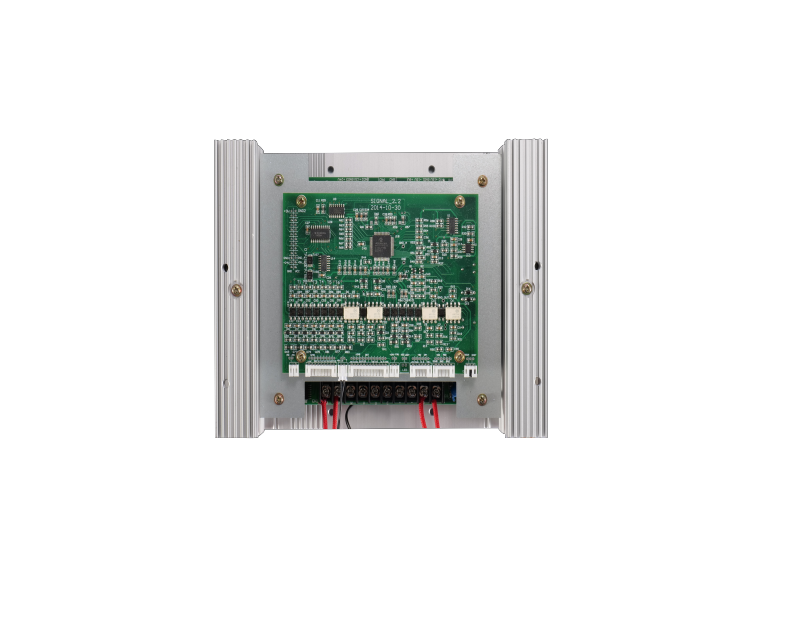
SMT processes are only applicable to Surface Mount Devices (SMD), not through-hole devices. However, SMD components offer more comprehensive soldering options for board mounting.
Why do companies prefer to combine SMD with SMT?
Early Surface Mount Devices (SMDs) required electronics manufacturers to manually install and solder smaller, more complex components. Machines could handle some of the work, of course, but only certain types and sizes.
Now, developing circuit boards using SMT is very straightforward because the process is significantly faster and more precise. In the past, soldering components to circuit boards involved placing tiny silver or lead tabs on the board. Solder paste (consisting of flux and a small amount of solder) continued to be used with these components. Unlike human workers who could connect perhaps a few hundred SMDs per hour, SMT machines can connect thousands. Therefore, almost every through-hole procedure now has an SMT equivalent.
SMT enables faster and cheaper mass production of circuit boards, leading to the rise of surface mount devices. Both time and circuit board space are now optimized. SMD allows for more compact and precise device assembly to accomplish more work.
Furthermore, SMT allows for faster and more precise assembly. More and more electronics manufacturing companies are using SMD on SMT because it saves costs and time.
How to ensure quality control with Automated Optical Inspection?
In today's competitive electronics market, electronic devices must be both high-quality and reliable. Defects can lead to production delays, increased costs, and importantly, damage to a company's reputation.
Therefore, it is crucial to employ stringent testing standards throughout the PCBA process, especially using Automated Optical Inspection (AOI), to mitigate the impact of these shortcomings.
AOI is an essential PCB testing procedure that helps identify defects and ensures that the PCBA meets standards. Therefore, in the remainder of this article, we will detail AOI testing and its importance in PCBA manufacturing.
What are the main elements of AOI?
Image processing technology plays a significant role in the inspection, enabling fast and accurate quality control of PCBs. Companies in the 3C industry use advanced cameras, top-of-the-line lenses, and image processing software to ensure good product quality.
The optical system plays a crucial role in the AOI system as it captures images of the target object. The efficiency of the system is directly proportional to the quality of these photos. Standard optical setups for AOI include the light source, lens, and camera.
Light Source
Product testing should be conducted under bright light conditions with a reliable light source. The success of defect detection largely depends on the nature of the light source, the color of the light, and the direction of the light source.
Depending on the task, an AOI system can use a single light source or multiple light sources. There was a time when companies employed various lighting options. Today's setups primarily use halogen lamps and LED arrays for stable and consistent light.
Lens
The system's lens focuses the reflected light from the product onto the image sensor of the camera. To obtain clear photos, you need a high-quality set of industrial lenses.
The image resolution of the AOI equipment determines the precision of the information it can detect and record. In other words, resolution is crucial because it determines the speed and accuracy of the inspection.
Keep in mind that the CCD imaging system is the foundation of the AOI system. The light source usually highlights the components being inspected. However, the important task, that of taking the picture, is performed by the lens, which then transmits it as a beam to the sensor. The quality of the pixels or the amount of information contained in the pixels is mainly determined by the camera's lighting system and lens.
This is why it is important to choose a better lighting system and advanced lenses. In addition to the lighting source, the success of the inspection operation also depends on the type of lens you choose.
Camera
Digital cameras typically take product photos. AOI systems can use a variety of devices, from simple 2D cameras to very advanced 3D sensors. They receive light and convert it into digital data in millions of small units called pixels. Algorithms in the AOI software then use this information for detection.
AOI 3D systems can quickly and comprehensively inspect entire circuits, significantly improving the efficiency and accuracy of the quality control process. Therefore, you can rest assured that only quality products leave the factory. Cutting-edge AOI technology can detect defects that human inspectors cannot.
If you incorporate AOI 3D as part of your quality control procedures, you can be confident that your electrical devices will work as intended.
Summary
SMT has replaced through-hole mounting due to lower production costs and shorter production times. Now, SMT is the standard method of PCBA assembly for most electronics companies.
Furthermore, as manufacturers respond to consumer demand for more compact products like mobile phones, the size of electronic components has also been continuously reduced. Component assembly on circuit boards is one area that has evolved alongside other technological developments. Thanks to technological advancements, even small devices can now offer lightning-fast service.
Now is the time to harness the power of optics, mechanics, and software. AOI is a cutting-edge technology that can replace human inspectors. As is well known, even small circuit boards can contain thousands of soldered components in today's competitive PCBA manufacturing environment. Therefore, automated optical inspection (AOI) is becoming increasingly important.
AOI technology helps companies reduce production costs, reduce waste, and increase output by continuously evaluating production quality and adjusting processes. Companies that want to improve their production skills and maintain market competitiveness should consider investing in an AOI system.
RECOMMENDED NEWS
High-end Custom Services: SMT Chip Processing Meets Diverse Industry Needs



(Telephone contact)
Email:
Address: Room 502, Building 1, No. 13, Bohua 4th Road, Huangpu District, Guangzhou City
COPYRIGHT © 2025 Guangzhou Tongsen Electronic Technology Co., Ltd. All rights reserved.