Welcome to Guangzhou Tongsen Electronic Technology Co., LTD. Website!


SMD and SMT Basics: A Comprehensive Guide
The electronics manufacturing industry is highly specialized, and those familiar with it often use basic abbreviations to express their needs, including but not limited to PCB (Printed Circuit Board), PCBA (PCB Assembly), and Through-Hole Technology (THT).
The electronics manufacturing industry is highly specialized, and those familiar with it often use basic abbreviations to express needs, including but not limited to PCB (Printed Circuit Board), PCBA (PCB Assembly), and Through-Hole Technology (THT).
In addition, it is worth noting that the acronyms SMT (Surface Mount Technology) and SMD (Surface Mount Device) frequently appear in relevant discussions. But what do they mean? Which is better, SMD or SMT, and why?
In fact, in the electronics manufacturing field, these two abbreviated terms are often confused. The difference between Surface Mount Technology (SMT) and Surface Mount Device (SMD) is more than just a terminological difference; it involves many factors. First, one might be described as a procedural operation, while the other can be categorized as equipment.
Here, we will highlight the differences between these two acronyms. But that's not all; you will also learn every detail of each phrase, starting with its meaning.
Surface Mount Technology (SMT): What is it?
Surface Mount Technology refers to the mounting and soldering of components onto a circuit board. This technology gained widespread adoption in the electronics industry during the 1980s. As methods and techniques improved, costs decreased and efficiency increased. SMT helped electronics companies and their customers save costs, reduce the number of devices used in products, while simultaneously improving performance, adding functionality, and reducing error rates.
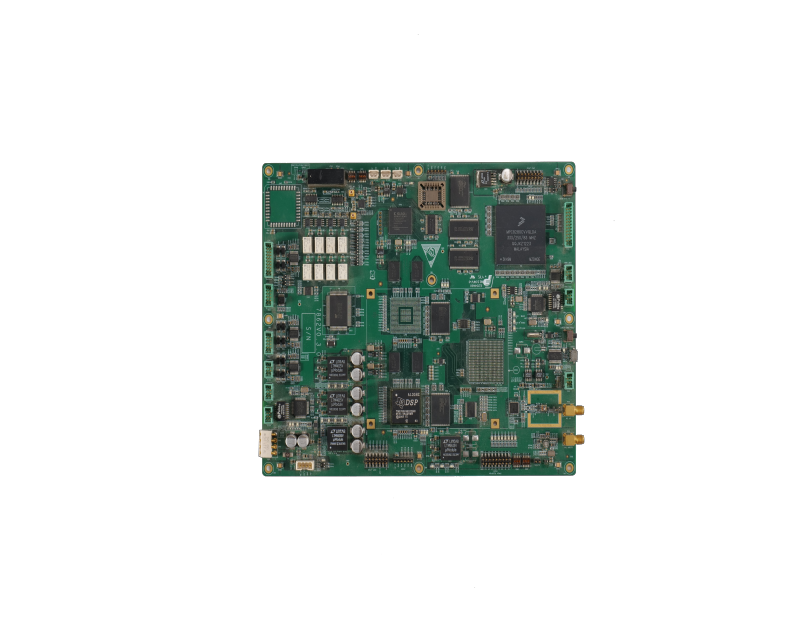
Smaller components, leaner production processes, fewer errors, and higher efficiency contribute to significantly lower manufacturing costs. Industries that rely on perfect performance are highly interested because of these advantages.
The use of SMT is constantly increasing across multiple industries, including consumer electronics, transportation, healthcare, and communications. These industries could not have grown without SMT, eliminating the need for less efficient and more error-prone procedures.
Basic Concept
Surface Mount Technology (SMT) is a technique for assembling printed circuit boards. It involves mounting electrical and electronic components directly onto the surface of the PCB.
The method involves applying solder paste to the surface of the circuit board to achieve precise alignment of the stencil. The stencil guides the pick-and-place machine to place the components precisely on the board. Afterward, the board is heated in an infrared oven to soften the solder paste and form the solder joints.
Characteristics of SMT
– SMT makes it easier to manufacture compact electronics or gadgets
– This technology helps minimize parasitic capacitance and inductance
– It reduces the number of PCBA parts required
– Modern automated machinery allows for consistent high output
SMT Assembly Process
Printing
Before printing, the SMT equipment places a stencil over the patching area of the PCB. A squeegee is used to scrape the stencil outward, depositing solder paste through the openings onto the appropriate solder pads.
Mounting
The solder paste acts as a temporary adhesive as the pick-and-place machine precisely positions the SMD components.
Reflow Soldering
Reflow soldering is the process of melting and solidifying the solder paste, which is currently in a semi-liquid state. It helps establish strong solder joints. The SMT method commonly uses reflow soldering when handling small-pin components such as ball grid arrays. It allows for precise temperature control and consistent heat distribution, resulting in excellent solder joints.
Testing and Inspection
After the SMT process is complete, manufacturers perform several inspection procedures to test for component placement, solder bridges, shorts, etc. These inspections use various methods, including manual inspection, AOI inspection, etc.
To firmly mount each component, SMT assembly workers use only the right amount of solder paste. Component placement on the PCB can also be done automatically by instructing the machine. This not only speeds up manufacturing and delivery times but also ensures accuracy.
Surface Mount Device (SMD): What is it?
A Surface Mount Device (SMD) is simply an electronic component that is attached to a circuit board. The efficient and precise SMT is the inspiration behind the development of SMDs.
Basic Concept
SMDs, or Surface Mount Devices, are electronic components that are attached to a circuit board during assembly. Their compact size stems directly from the market demand for more efficient and affordable technological devices.
As technology became smaller and more complex in the latter half of the 20th century and into the 21st, through-hole methods became obsolete. Traditional components were not only larger but also slower to install. SMDs use leads instead of wires to connect to the pads on the circuit board. Because no drilling is required, the entire circuit board can be fully utilized without waste.
SMD Characteristics
– Leads on SMDs are either missing or very short.
– It minimizes through-holes on the PCB, thus avoiding manufacturing errors.
– Despite the reduced size, efficiency is increased.
– It allows the solder joint and the SMD body to be on the same side.
SMD Components
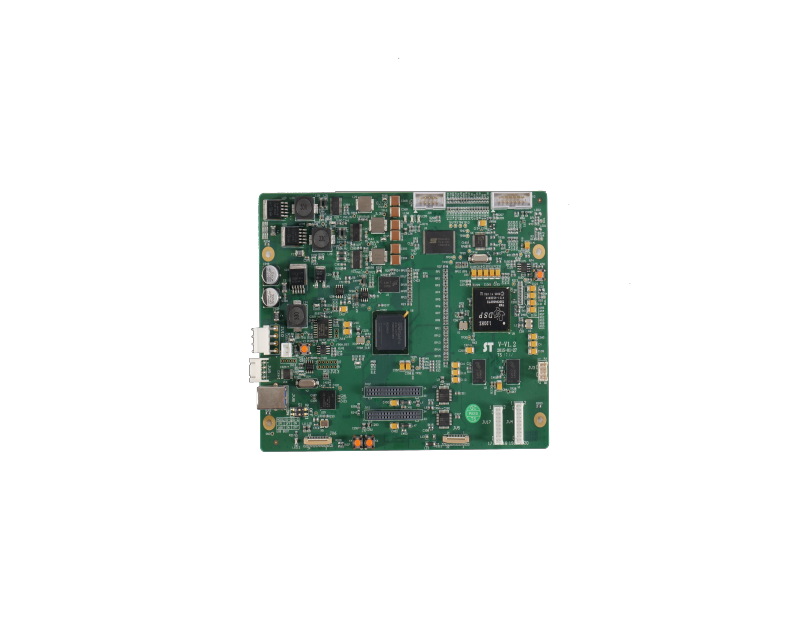
Only 20 years after their introduction, SMD components have become the industry standard. Surface mount devices are now very popular because of their increasing widespread use. You will find a wide variety of SMD components. Below is a list of all the important SMD components.
Resistors:
SMD resistors are typically surface mounted using SMT technology. However, their installation requires extra care. They usually have electrodes connected at both ends. They come in two types, including thick-film and thin-film. When talking about surface mounting, you will encounter the term R-packs. These are resistor networks that help save placement time.
Ceramic Capacitors:
SMD SMT chip technology is crucial for mounting SMD ceramic capacitors. They are used in areas critical to high-frequency circuits, such as engines, communication machinery, and aircraft systems. These are among the useful and reliable SMD components. You will find them widely used in automotive, military equipment, and aerospace applications.
Transistor (SOT):
It consists of a surface mount device with three or four leads. Companies use these devices on electronic equipment to switch or amplify power. They are used in many electronic devices, including radio, audio, and video equipment. It is essentially a semiconductor device that helps amplify or control electronic signals.
Integrated Circuit (IC):
Resistors, transistors, and capacitors are just a few of the components that make up an integrated circuit (commonly called an IC chip). Essentially, engineers use IC programming and semiconductor processing to build small PCBs with a target function.
In short, SMD components are components surface-mounted on a PCBA board, relying on surface mount technology to perform their intended tasks. Using surface mount devices (SMDs) in PCB manufacturing is a common practice as they conform to miniaturization trends and ensure assembly quality.
RECOMMENDED NEWS
High-end Custom Services: SMT Chip Processing Meets Diverse Industry Needs



(Telephone contact)
Email:
Address: Room 502, Building 1, No. 13, Bohua 4th Road, Huangpu District, Guangzhou City
COPYRIGHT © 2025 Guangzhou Tongsen Electronic Technology Co., Ltd. All rights reserved.