Welcome to Guangzhou Tongsen Electronic Technology Co., LTD. Website!


What are printed circuit boards made of? (Part 2)
High-quality custom PCBs allow for greater control over all aspects of circuit layout. Furthermore, custom PCBs project a more professional image to most industry clients and investors.
What are the different types of PCBs and what are they made of?
PCBs are composed of conductive and non-conductive layers bonded together. However, the PCB materials used in manufacturing and assembly may vary depending on the application of the circuit board and customer requirements.
Each type of PCB incorporates different PCB materials. With that in mind, let's examine the popular PCB types in more detail and outline their key advantages.
Single-sided PCB
A single-sided PCB is a printed circuit board with a single layer of conductive material on one side. The other side is used for mounting different electronic components. Single-sided PCBs consist of a substrate layer, a conductive metal layer, a protective solder mask, and a silkscreen layer.
Single-sided PCBs are very common due to their simple design and low cost. Despite the simple manufacturing process, they can still be used in many complex electronic devices such as stereo equipment, printers, and vending machines.
Double-sided PCB
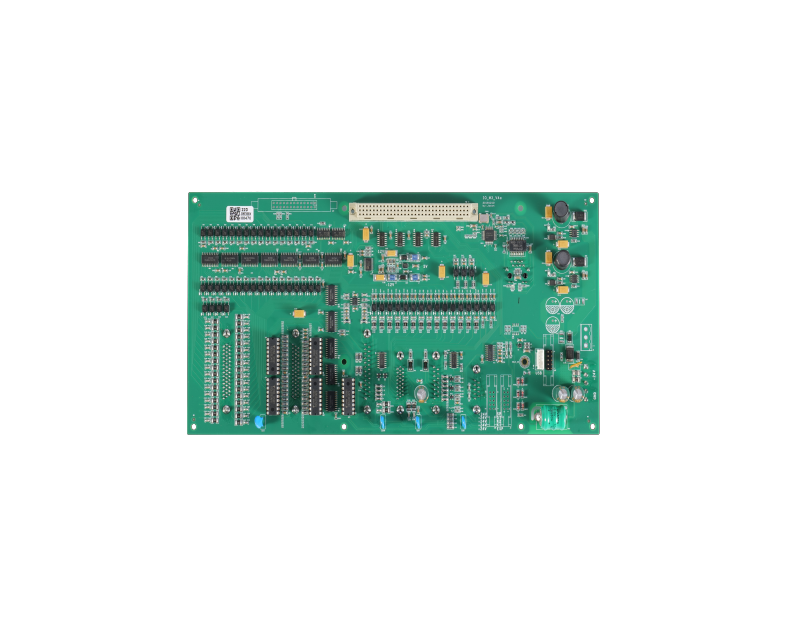
Double-sided PCBs (also known as double-layer boards) allow for more complex designs and circuits.
Unlike single-sided PCBs, double-sided PCBs allow for conductive copper to be applied to both sides of the board. This allows for tighter routing.
Components on the two boards can be connected via surface mount technology or through-hole technology, depending on your product needs. All common layers used in single-sided PCBs, such as the substrate, copper layer, silkscreen layer, and solder mask, are used in double-sided PCBs. However, these layers are applied to both sides of the board, not just one.
Double-sided PCBs are very popular due to their ease of use and flexibility. This is partly because they allow for more complex circuits, meaning they can be used in more advanced electronic systems such as lighting and automotive dashboards.
Multilayer PCB
Multilayer PCBs are designed and manufactured using multiple substrate layers. Generally, multilayer PCBs have at least three conductive layers.
These PCBs are constructed using a "sandwich model," characterized by multiple double-sided conductive layers separated by a corresponding number of insulating material sheets. These material sheets are bonded and laminated together under high pressure.
Multilayer PCBs offer more functionality for computers, medical devices, and GPS trackers, as well as more complex circuits and devices. In these complex situations, they are often preferred over double-sided PCBs because they can achieve more complex circuits in a smaller space.
Rigid PCB
As the name suggests, rigid PCBs are sturdy and inflexible. They are made of several different layers that are joined together using adhesives and heat. Depending on the requirements, rigid PCBs can be single-sided, double-sided, or multilayer.
Rigid PCBs are inexpensive and can be mass-produced. They are also very durable. Therefore, they are often used in products and industries where it is necessary to keep the components fixed.
Flexible PCB
Flexible PCBs, also known as "flex circuits" or "flexible circuits," are designed to conform to devices or products. Therefore, flexible PCBs are usually thin and lightweight, performing well in tight spaces and contoured shapes.
Flexible PCBs do not use fiberglass as the substrate layer of the circuit board. This is because this material is too rigid. To ensure that the circuit board is both flexible and durable, flexible PCBs use plastics such as Kapton as the substrate layer.
Flexible PCBs are popular because they do not take up as much space as other forms of PCBs. They can also withstand extreme temperatures and are compatible with a variety of components and connectors. In addition, their inherent flexibility allows them to bend to fit your product.
Rigid-flex PCB
A rigid-flex PCB is a hybrid form of printed circuit board. Therefore, it combines elements of both flexible and rigid circuit boards. As a result, rigid-flex PCBs can be folded or continuously bent. In fact, during manufacturing, the boards are often formed into bent shapes or curves.
Rigid-flex PCBs use 3D designs. This allows the board to be twisted or bent into the desired shape. In addition, rigid-flex PCBs are usually thinner than other forms of printed circuit boards. Due to the thinner copper layers and the absence of adhesives in the laminates, rigid-flex PCBs are a compact and lightweight solution.
High-Density Interconnect PCB
HDI PCBs, also known as high-density interconnect PCBs, are a relatively new form of printed circuit board. However, today, they are one of the fastest-growing technologies in the printed circuit board field.
Compared to traditional circuit boards, HDI PCBs have a higher circuit density. In addition, HDI PCBs also feature blind vias and buried vias, as well as smaller diameter microvias. This means that designers are also able to place smaller components more closely together on the board, resulting in faster signal transmission speeds and reduced signal loss or cross-talk.
For these reasons, HDI PCBs are more compact and have fewer layers than multilayer PCBs. However, HDI PCBs are small in size but high in quality to make up for this. Because of this, they are popular in advanced technology systems such as smartphones and game consoles.
LED PCB
An LED PCB is a special type of printed circuit board designed for various lighting modules and applications.
In the manufacturing of LED PCBs, multiple light-emitting diodes (LEDs) are mounted onto the PCB and form a complete circuit. This allows their behavior to be fully controlled through various switches.
Therefore, LED PCBs are widely used in countless industries to control lighting. For example, they are used in automotive lighting, street lighting, flashlights, and work lights.
Blank PCB
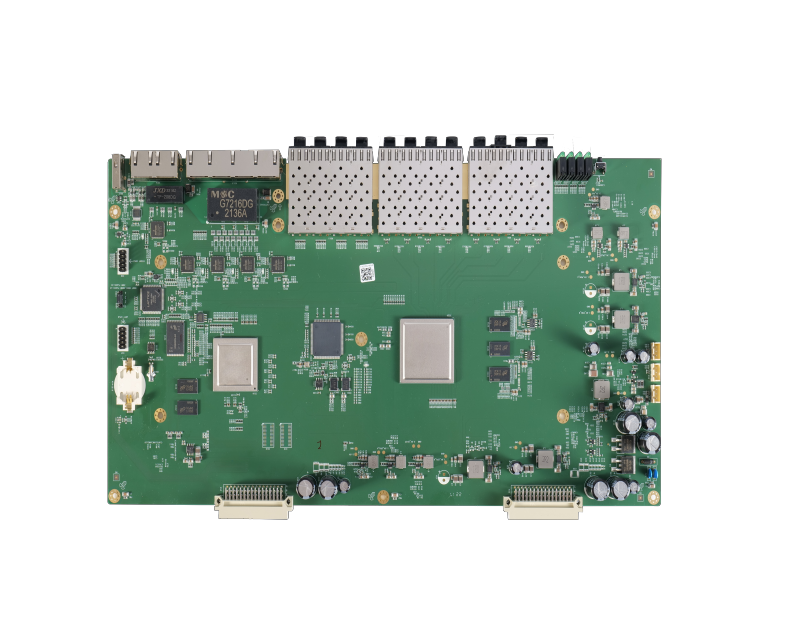
A blank PCB is, as the name suggests: an empty circuit board without any components mounted to create a functional circuit board.
Because of the visible copper layer, blank PCBs are sometimes also called "copper-clad circuit boards." The copper plays a crucial role. It ensures that when components are placed on the board in subsequent stages, the board will have effective and efficient energy flow.
Although some people believe that blank PCBs are entirely made of copper, this is inaccurate. To ensure that blank PCBs remain durable and sturdy, silicon and other materials are also used in the process. These also ensure that the PCB has rust-proof properties.
Blank PCBs are the foundation for mounting components and parts. These boards are very popular with companies that have the technology to assemble and manufacture printed circuit boards but need a blank canvas to start with.
Custom PCBs
If it better suits your project and needs, we can also provide fully customized solutions in the form of custom PCBs.
Custom PCBs have become a popular solution. This is especially true if the PCB design needs to be complex, or if a balance needs to be struck between labor and manufacturing costs.
High-quality custom PCBs give you better control over all aspects of the circuit layout. Furthermore, custom PCBs also appear more professional in the eyes of most industry clients and investors.
RECOMMENDED NEWS

High-end Custom Services: SMT Chip Processing Meets Diverse Industry Needs



(Telephone contact)
Email:
Address: Room 502, Building 1, No. 13, Bohua 4th Road, Huangpu District, Guangzhou City
COPYRIGHT © 2025 Guangzhou Tongsen Electronic Technology Co., Ltd. All rights reserved.