Welcome to Guangzhou Tongsen Electronic Technology Co., LTD. Website!


A brief description of the basic processes of SMT surface mount processing
From the above brief description of the basic constituent processes, we can see that SMT surface mount processing is a complex and delicate process that requires strict control of process parameters and quality requirements at each stage. In the field of Industrial Internet of Things, with the continuous advancement of technology and the improvement of application needs, SMT surface mount processing technology will continue to be optimized and innovated, injecting new vitality into the development of the electronics manufacturing industry.
In the wave of Industrial Internet of Things (IIoT), SMT (Surface Mount Technology) assembly technology, with its high precision, high efficiency, and high automation, has become one of the key technologies in the electronics manufacturing field. As a senior engineer in IIoT, I will briefly introduce the basic constituent processes of SMT assembly to traditional industries, helping everyone better understand the core content and applications of this technology.
I. PCB Preparation
The first step in SMT assembly is preparing the printed circuit board (PCB). As the carrier of electronic components, the quality of the PCB directly affects the subsequent assembly effect. Therefore, before SMT processing, the PCB needs to be strictly inspected to ensure that its surface is clean, flat, and free of scratches, oil stains, and other defects. At the same time, the PCB needs to be marked for positioning so that the placement machine can accurately place the components in the designated positions.
II. Component Preparation
SMT assembly uses a wide variety of components, including resistors, capacitors, inductors, IC chips, etc. Before processing, these components need to be screened, classified, and stored to ensure that the specifications, models, and quantities of the components are consistent with the BOM (Bill of Materials) list. At the same time, the components also need to be quality-tested, and unqualified products should be removed to ensure the quality of the assembly.
III. Solder Paste Application
Solder paste is a key material in SMT assembly used to connect components to the PCB. When applying solder paste, a screen printer is used to evenly apply the solder paste to the PCB pads. Parameters such as the thickness, uniformity, and coverage area of the solder paste have a significant impact on the subsequent welding quality. Therefore, when applying solder paste, process parameters must be strictly controlled to ensure that the solder paste quality meets the requirements.
IV. Component Placement
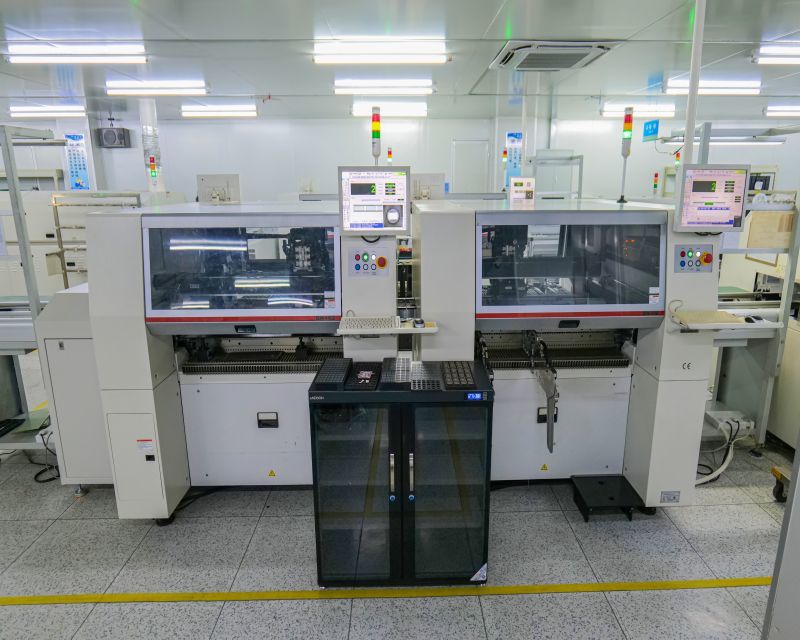
Component placement is the core step in SMT assembly. In this step, a high-precision placement machine is used to accurately place the components in the designated positions on the PCB according to the design requirements. The placement machine uses a vision recognition system to locate the components and the PCB, ensuring the accuracy and precision of placement. At the same time, the placement machine can also rotate and tilt the components as needed to adapt to different placement requirements.
V. Reflow Soldering
Reflow soldering is one of the key processes in SMT assembly. During the soldering process, the PCB passes through the high-temperature zone of the reflow soldering machine, causing the solder paste to melt and form a firm solder joint with the component leads and PCB pads. Reflow soldering requires strict control of the temperature curve and time to ensure soldering quality. Temperatures that are too high or times that are too long may damage the components or cause poor soldering, while temperatures that are too low or times that are too short may lead to weak or false soldering.

VI. Quality Inspection and Repair
After SMT assembly, the soldered circuit board needs to be quality-inspected. This includes visual inspection, continuity testing, and electrical parameter testing to ensure the soldering quality and the correctness of the circuit function. For unqualified products detected, repair processing is needed, including component replacement and resoldering, to ensure the quality and performance of the final product.
Through the brief description of the above basic constituent processes, we can see that SMT assembly is a complex and delicate process that requires strict control of the process parameters and quality requirements of each link. In the field of IIoT, with the continuous advancement of technology and the improvement of application needs, SMT assembly technology will also continue to be optimized and innovated, injecting new vitality into the development of the electronics manufacturing industry.
RECOMMENDED NEWS

High-end Custom Services: SMT Chip Processing Meets Diverse Industry Needs



(Telephone contact)
Email:
Address: Room 502, Building 1, No. 13, Bohua 4th Road, Huangpu District, Guangzhou City
COPYRIGHT © 2025 Guangzhou Tongsen Electronic Technology Co., Ltd. All rights reserved.