Welcome to Guangzhou Tongsen Electronic Technology Co., LTD. Website!


SMT Surface Mount Technology Assembly: A Complete Guide from Process to Precautions
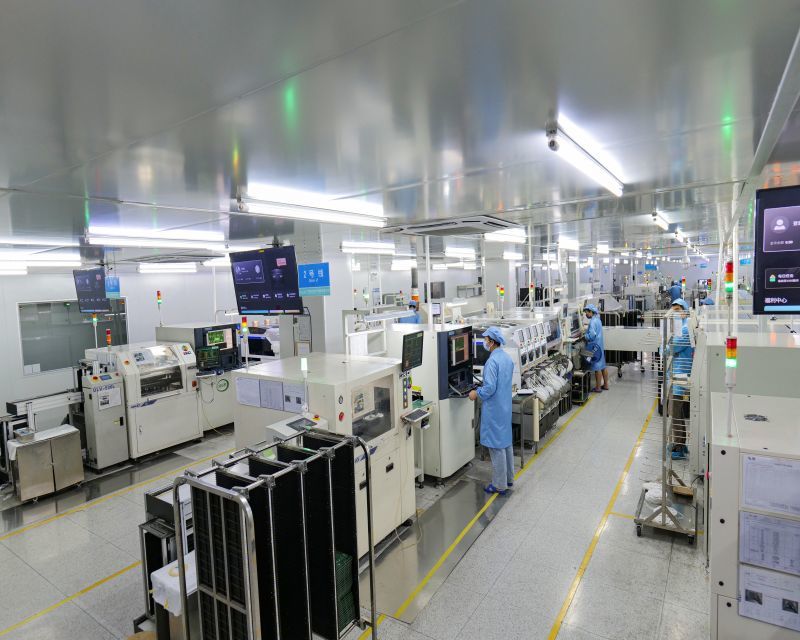
The SMT surface mount process includes stencil printing, placement, reflow soldering, inspection and testing, and cleaning. To ensure the smooth progress of the process and product quality, attention should be paid to design and planning, raw material quality, equipment precision and stability, personnel training and operation, process control, quality inspection and testing, environmental control, anti-static measures, and product storage and transportation.
Surface Mount Technology (SMT) is a widely used technology in modern electronics manufacturing. SMT assembly is the process of precisely mounting surface mount devices (SMDs) onto printed circuit boards (PCBs). This article will introduce the main processes and precautions of SMT assembly.
I. SMT Assembly Process
SMT assembly typically includes the following main processes:
Solder Paste Printing
First, solder paste is printed onto the PCB. This is achieved using a solder paste printer and a stencil. In this process, the thickness, viscosity, and printing accuracy of the solder paste must be ensured.
Placement
SMD components are placed onto the PCB. This step is usually completed by a pick-and-place machine. The machine, according to programmed data, precisely places the components in their designated positions. At this stage, the orientation and position of the components need attention.
Reflow Soldering
Reflow soldering is done by placing the PCB into a reflow oven, melting the solder paste and welding it to the SMD components. The temperature curve and time of the reflow oven need to be precisely controlled to ensure welding quality.
Inspection and Testing
After soldering, the PCB needs to be inspected and tested to ensure that all components are correctly installed and functioning properly. This step may include visual inspection, X-ray inspection, automated optical inspection (AOI), and functional testing.
Cleaning
Sometimes, the PCB needs to be cleaned to remove residues from the soldering process. Cleaning can be done with water or special cleaning solvents. It should be noted that the cleaning process may have some impact on the PCB and components, so a suitable cleaning method should be chosen.
II. Precautions for SMT Assembly
To ensure the smooth progress of the SMT assembly process and product quality, here are some points to note:
Design and Planning
Before starting SMT assembly, detailed design and planning of the PCB are required. This includes optimization of the PCB layout, selection of component packages, and setting of welding parameters.
Raw Material Quality
Raw materials used in SMT assembly, such as PCBs, components, and solder paste, will affect the quality of the final product. Therefore, it is essential to ensure the quality of raw materials.
Equipment Accuracy and Stability
Using high-precision and stable equipment can ensure the smooth progress of the SMT assembly process. For example, the accuracy of the pick-and-place machine directly affects the installation position of the components, and the temperature control of the reflow oven affects the welding quality.
Personnel Training and Operation
Qualified operators are crucial to the SMT assembly process. Operators need to be adequately trained to ensure they understand the requirements and precautions of each process, avoiding unnecessary errors.
Process Control
Strictly control the process parameters of each process, such as the thickness of solder paste printing, the speed of the pick-and-place machine, and the temperature curve of the reflow oven. Only by strictly controlling the process parameters can product quality be ensured.
Quality Inspection and Testing
Throughout the SMT assembly process, regular quality inspections and tests are needed to promptly identify and resolve problems. More stringent inspection standards can be applied to critical components and solder joints.

Environmental Control
A good production environment is very important for the SMT assembly process. Environmental factors such as temperature, humidity, and cleanliness need to be controlled to ensure the stability of the production process.
Anti-static Measures
Since SMD components are very sensitive to static electricity, effective anti-static measures must be taken throughout the SMT assembly process, such as using anti-static gloves, anti-static clothing, and anti-static floors.
Product Storage and Transportation
After SMT assembly, products need proper storage and transportation. Moisture-proof, shock-proof, and anti-static measures should be taken to ensure product quality and performance.
Summary
The SMT assembly process includes solder paste printing, placement, reflow soldering, inspection and testing, and cleaning. To ensure the smooth progress of the process and product quality, attention should be paid to design and planning, raw material quality, equipment accuracy and stability, personnel training and operation, process control, quality inspection and testing, environmental control, anti-static measures, and product storage and transportation. Only by comprehensively paying attention to these precautions can high-quality and reliable SMT assembly be achieved.
RECOMMENDED NEWS

High-end Custom Services: SMT Chip Processing Meets Diverse Industry Needs



(Telephone contact)
Email:
Address: Room 502, Building 1, No. 13, Bohua 4th Road, Huangpu District, Guangzhou City
COPYRIGHT © 2025 Guangzhou Tongsen Electronic Technology Co., Ltd. All rights reserved.