Welcome to Guangzhou Tongsen Electronic Technology Co., LTD. Website!


What does SMT mean?
SMT, or Surface Mount Technology, is a commonly used abbreviation that describes the method of mounting electronic components directly onto the surface of a PCB, or printed circuit board. Modern commercially manufactured electronics are full of miniature devices that would be impossible to produce using traditional components and manual methods. Unlike wire systems occasionally used in home kits, SMT allows components to be mounted directly to the surface of the printed circuit board.
What does SMT mean?
SMT is an abbreviation for Surface Mount Technology. It's a method of mounting electronic components directly onto the surface of a printed circuit board (also known as a PCB).
SMT, or Surface Mount Technology, is a commonly used working abbreviation that describes in detail the method of mounting electronic components directly onto the surface of a PCB, or printed circuit board. Today's commercially manufactured electronics are filled with miniature devices that would be impossible to produce using traditional components and manual labor. Unlike wire systems occasionally used for home kits, SMT allows components to be mounted directly to the surface of the printed circuit board.
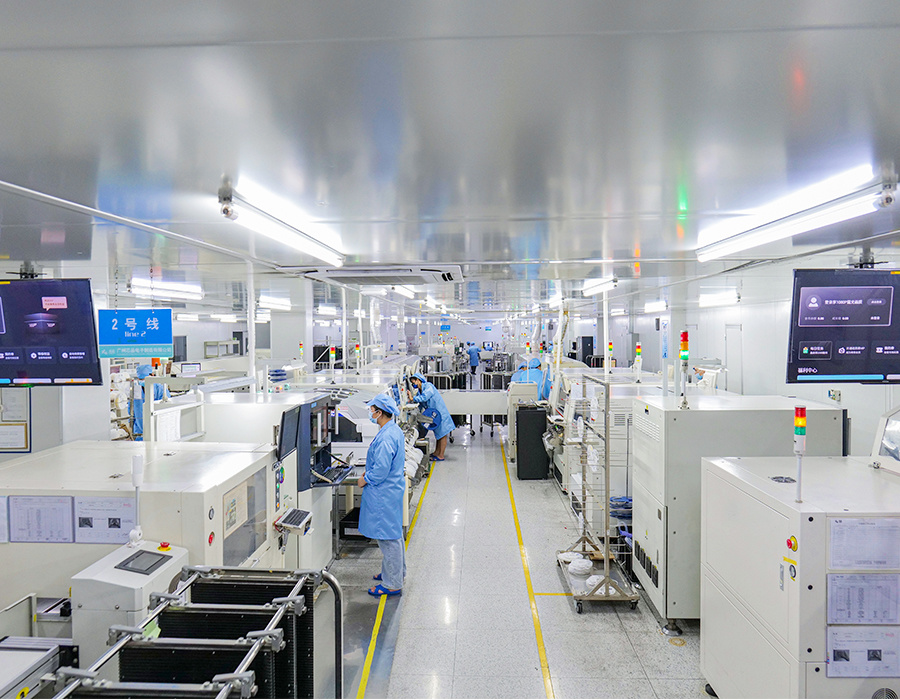
Almost all of our electronic devices are manufactured using this technology. SMT offers significant advantages in cost, production, and labor, and has revolutionized manufacturing since the 1970s. The size, automation, and assembly provided by SMT significantly improve the reliability of electronic products and save significant overall financial costs.

Instead of being manufactured with leads and wires, SMT components are mounted on the PCB and soldered directly to the circuit board. SMT package types include passive components, transistors and diodes, and integrated circuits. The wide variety of SMT components allows manufacturers to produce the exact PCB a customer requires. Advances in surface mount technology have made possible a wide variety of components far beyond what was ever possible with traditional through-hole forms. Over the past 50 years, surface mount technology has helped many different industries flourish.
SMT is a machine-automated process that eliminates human error and has a range of advantages that benefit the manufacturing process. Running an SMT process is faster and more cost-effective, with fewer errors and lower costs. Additionally, because surface mount technology is smaller in size, products can be more compact. The smaller the internal components, the less external packaging, the smaller the size, and the more advanced the technology.
There are many benefits to using SMT. The technology has many environmental advantages, such as lower resistance at connection points, greater flexibility when building printed circuit boards, higher levels of automation, higher component density, smaller and lighter circuit boards, fewer drilled holes, easier assembly, and better overall performance. Surface mount technology enables more efficient PCBAs, meaning mass production is possible for thousands of industries.
The Evolution of Surface Mount Technology
There are two main manufacturing technologies in PCBA (Printed Circuit Board Assembly) processes. Through-hole technology is required in some cases, but less frequently—through-hole designs are more inconvenient to build.
Most PCB manufacturers have the capability to handle any through-hole project. Surface mount technology has many advantages, but how did this technology come about? Customers may be interested in learning how SMT was conceived, how it has continuously evolved, and how it has benefited the PCB industry.
Through-hole technology developed in the 1960s and evolved into surface mount technology in the 1970s. While through-hole assembly was touted as an alternative to PCBA, it was the only option available to manufacturers until the 1960s. It remains a reliable assembly method, although the process became too time-consuming, making it difficult for assemblers to meet demand. As technology changed over time and circuit boards became increasingly popular across various industries, SMT emerged as the electronics manufacturing industry's response to this change.
Surface Mount Technology: History
SMT began to develop in the 1960s, and then fully integrated into PCB manufacturing and assembly in the 70s and 80s. This automated assembly method allowed PCB assemblers to offer faster turnaround times on the same quality PCBs at a lower labor cost. Additionally, SMT created new opportunities for higher density PCBAs, such as double-sided PCB components and components requiring larger quantities.
As technology advanced, surface mount technology continued to be implemented. By using SMT, manufacturers were able to produce miniature components with increasingly smaller PCB components. SMT allows for automated soldering of components, meaning that PCBAs do not need to leave much space between components. With smaller components, there is less room for assemblers to make mistakes, meaning that SMT had to become more prevalent than through-hole technology. Surface mount technology allows industry strategies to avoid PCB overheating, soldering failures, and other errors.
The Future of SMT
Surface mount technology has a long history, but it is still undergoing many necessary changes as the demand for PCBAs continues to increase. The industry, customers, and manufacturers naturally question how this technology will continue to evolve to meet the needs of an ever-changing future. A common concern regarding PCBAs relates to the environmental sustainability of these projects. While technology continues to adapt to new industry standards, SMT processes have been redesigned to accommodate RoHS (lead-free) solder. As SMT processes evolve, PCB manufacturers and assemblers continue to strive to meet customer needs.
The illustrious history of SMT innovation has fueled the growth of the PCB industry, in turn making many technologies and products possible. SMT continues to be built upon industry needs, with manufacturers keeping pace with innovation to provide the best possible service.
RECOMMENDED NEWS
High-end Custom Services: SMT Chip Processing Meets Diverse Industry Needs



(Telephone contact)
Email:
Address: Room 502, Building 1, No. 13, Bohua 4th Road, Huangpu District, Guangzhou City
COPYRIGHT © 2025 Guangzhou Tongsen Electronic Technology Co., Ltd. All rights reserved.