Welcome to Guangzhou Tongsen Electronic Technology Co., LTD. Website!


Principles for Selecting PCB Substrates
The cost of a PCB is an important factor. Expensive PCBs may not be suitable for the project, while cheap PCBs may not deliver the desired results. The cost of a PCB depends on its functionality. The more elements, the higher the cost; the price increases when the PCB has features such as filling and buried holes.
Typically, people choose certain types of PCB substrates for their projects based on fundamental principles. If you know the purpose and application of your PCB, then you can easily choose the right substrate.
Common principles are:
1) If your project is a general-purpose electronic product with normal ambient temperature and frequency, then FR-4 is suitable. This would be a cost-effective choice.
2) If the PCB is used in a high-temperature range, then high-temperature resistance is required. For example, High-Tg PCB. Learn more: Unveiling the Mystery of High-Tg PCB Boards Materials
3) Some circuits have high-frequency components, so special PCBs are needed. PTFE fiberglass can be used in this case.
4) In some circuits, some electronic components generate a lot of heat, and this heat can easily cause ordinary PCB boards to bend, so metal substrates need to be used.
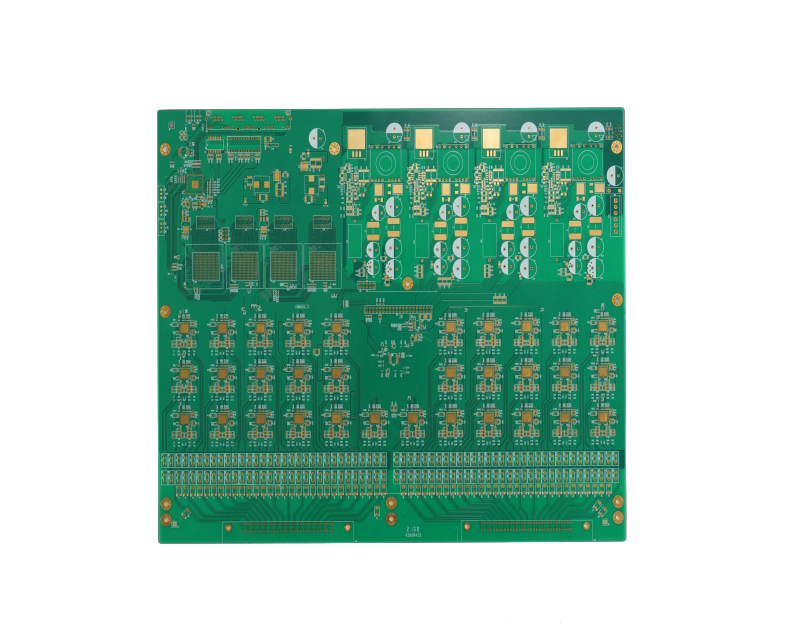
Factors to Consider When Choosing PCB Material
To choose the right PCB material, you need to consider several factors. If you understand the factors to consider, then you can easily get good PCB material for your project, and the PCB will deliver the desired results. You can also discuss these factors with the PCB manufacturer or fabricator. Let's look at the factors that must be considered when choosing PCB materials.
a) Glass Transition Temperature
The substrate should have a high glass transition temperature (Tg). A higher Tg can handle heat dissipation and ambient temperature. Materials with a Tg higher than the circuit temperature must be chosen. Otherwise, the substrate will melt or warp during operation.
b) Coefficient of Thermal Expansion
The coefficient of thermal expansion of the PCB material should be low. If the coefficient of thermal expansion is high, then for every unit increase in temperature, the material will expand by a larger amount. This will affect the length, width, and thickness of the PCB board. The PCB is easily deformed and may damage the board and components. Be sure to choose materials with a low coefficient of thermal expansion.
c) Heat Resistance
High heat resistance is required. Generally, the PCB must have a heat resistance of 250℃/50S. If you need higher heat resistance, you can discuss it with the PCB manufacturer.
d) Flatness
Good flatness should be maintained. The warp should be less than 0.0075mm/mm.
e) Dielectric Constant and Loss
The PCB material should have an excellent dielectric constant. It will provide excellent insulation and deliver the desired results. In addition, the dielectric loss should be low to save energy.
f) Degree of Bending
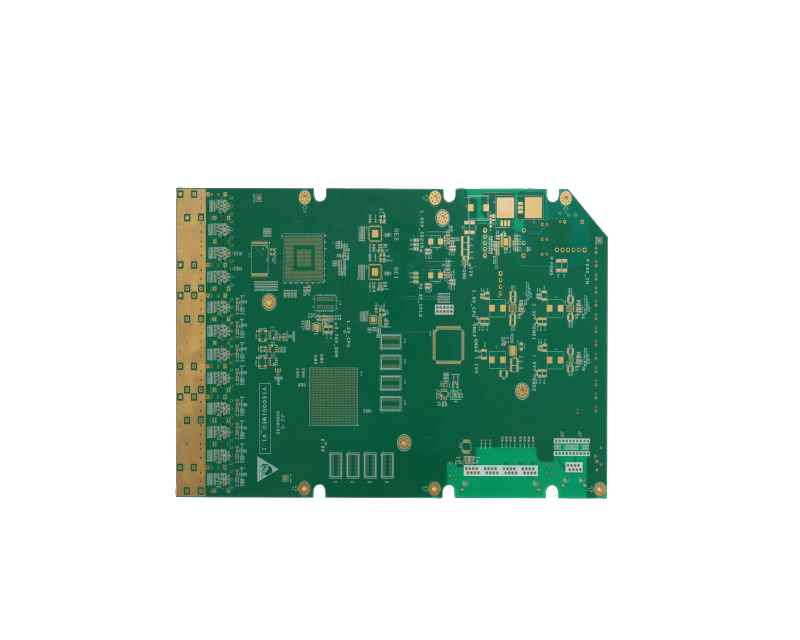
The PCB should not bend easily. If it bends at the ambient temperature where the equipment is installed, then it will wear out quickly. It will not last very long. Therefore, the bending degree of the PCB should be small so that it will not bend at the operating temperature of the circuit. Its heat resistance should be high, depending on where it will be used. Some substrates, such as FR-4, have a small bending degree, which is suitable. When the PCB is larger than 3.2 × 1.6mm, the bending degree is important. Due to the larger size, the bending has a greater impact on it. Therefore, for large PCBs, you need to be more careful. In addition, the appearance requires smoothness and flatness, without warping, cracks, scratches, and rust.
g) Cost Factor
The cost of the PCB is an important factor. Expensive PCBs may not be suitable for the project, while cheap PCBs may not deliver the desired results. The cost of a PCB depends on its functionality. The more elements, the higher the cost; when the PCB has functions such as filling and buried holes, the price will increase. In addition, when the width spacing we need is smaller, the price will also increase because it is more refined. Due to these characteristics, you need special machinery and processes, which will increase the cost of the PCB. You must check the price and only get the functions you need. Otherwise, the cost of the PCB will increase, thus increasing the project cost.
Previous
Previous :
RECOMMENDED NEWS

High-end Custom Services: SMT Chip Processing Meets Diverse Industry Needs



(Telephone contact)
Email:
Address: Room 502, Building 1, No. 13, Bohua 4th Road, Huangpu District, Guangzhou City
COPYRIGHT © 2025 Guangzhou Tongsen Electronic Technology Co., Ltd. All rights reserved.