Welcome to Guangzhou Tongsen Electronic Technology Co., LTD. Website!


PCB materials and industry applications
When selecting PCB board materials, whether for home electronics or industrial equipment, quality is paramount in the manufacture of any type of circuit board. The components contained in a printed circuit board may be large or small, inexpensive or expensive, but importantly, the relevant items perform excellently throughout their intended lifespan.
When it comes to circuit boards, the color most people are familiar with is green, which is the color of the solder mask. While less common, solder masks can sometimes appear in other colors, such as red or blue. Solder mask is also known by the acronym LPISM, which stands for Liquid Photo Imageable Solder Mask. The purpose of the solder mask is to prevent liquid solder from leaking. In recent years, this has become increasingly common due to a lack of solder mask. However, according to most people, users generally prefer circuit boards with a solder mask to those without one.
After applying the solder mask to the PCB, the PCB is subjected to molten solder. During this process, the exposed surface of the copper is soldered. The whole process is called Hot Air Solder Leveling (HASL). When soldering SMD chips, the circuit board is heated to the point where the solder is molten, and the components are placed in their proper positions. As the solder dries, the components are also soldered. HASL typically uses lead as a compound in the solder, but lead-free options are also available.
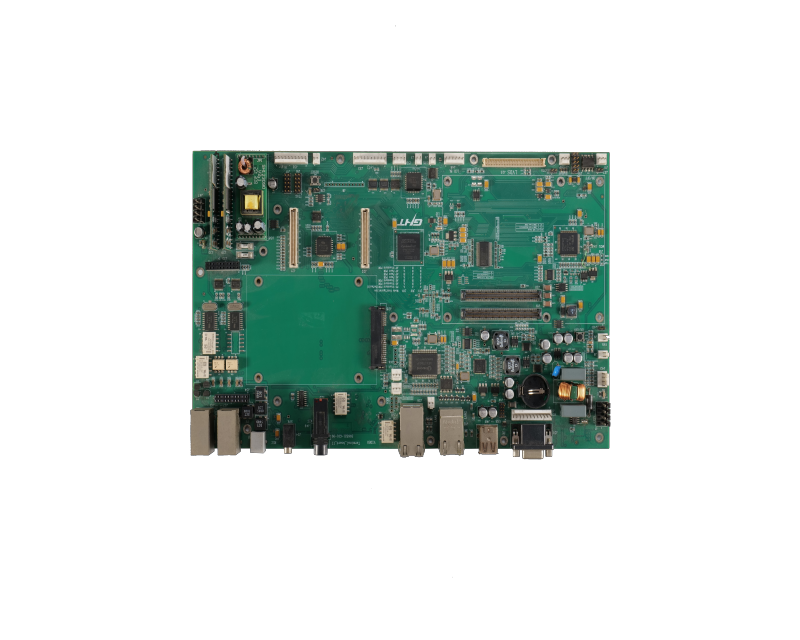
The spacing of the track width is indicated by a hyphen. For example, when you see the number 6/6 mils, this will specify 6 mils as the minimum track width, as well as the minimum track spacing. Therefore, all spacing on the relevant board should meet or exceed 6 mils. For those unfamiliar, mils is a unit used to determine distances on PCB materials. Width and spacing are especially important for boards designed to handle large amounts of current.
When the PCB board is multilayer, it is impossible to visually inspect the accessibility of various tracks. Therefore, a test is needed, placing probes at the ends of the tracks to verify that all signals are accessible. The test applies voltage from one end. If these voltages are sensed from the other end, the tracks are considered functional. While testing isn't always necessary for boards with only one or two layers, it's still recommended if you truly care about quality.
Through-holes that connect inner and outer layers are called blind vias. This name comes from the fact that this type of through-hole can only be found from one side. Through-holes that connect two or more inner layers are called buried vias, and cannot be found from either side. On circuit boards containing blind and buried vias, through-hole filling is usually used. This can secure the outer surface and help reduce the possibility of solder slipping through and penetrating the inner vias.
Material selection impacts cost
PCBs that include features such as metallization, blind or buried vias, or through-hole filling typically cost more. Similarly, PCBs with line width spacing below 6 mil also tend to be more expensive. The reason for these higher prices is that alternative processes are required when producing unusual PCBs. Similarly, when using low mil or internal vias, the profit or success rate of certain PCB productions decreases, so the higher price will compensate for the loss. Some manufacturers produce PCBs with line width measurements as low as 3 mil, but this is generally not recommended unless it is a choice for a specific component.
The impact of power and heat on PCB material selection
Of all the factors affecting PCBs, power and heat are two of the most significant. Therefore, it is crucial to determine the threshold for each factor, which can be achieved by evaluating the thermal conductivity of the PCB. This defines how wattage power translates into temperature over the length of the material. However, there is currently no established industry-wide thermal conductivity value.
PCB materials and industry applications
For applications in the military, aerospace, automotive, and medical industries, PCBs come in single-sided and double-sided types, some with copper cladding and others with aluminum. In these industries, materials are used for specific areas to achieve great performance. Therefore, in some industries, PCB core materials are favored for their light weight, while in others they are favored for their ability to handle large amounts of electricity. Therefore, when considering performance capabilities, it is crucial to determine which features need to be compared when selecting raw materials for PCBs, as material level is correlated with performance level.
Flexible and rigid-flex circuit boards
In recent years, flexible and rigid-flex circuit boards have become increasingly popular due to their versatility. Essentially, they can be bent, folded, and even wrapped around objects, so they can be used in applications that flat circuit boards cannot achieve. For example, flexible circuit boards can be used in devices that require the board to fold at an angle and still transmit current from one end to the other without a connecting panel.
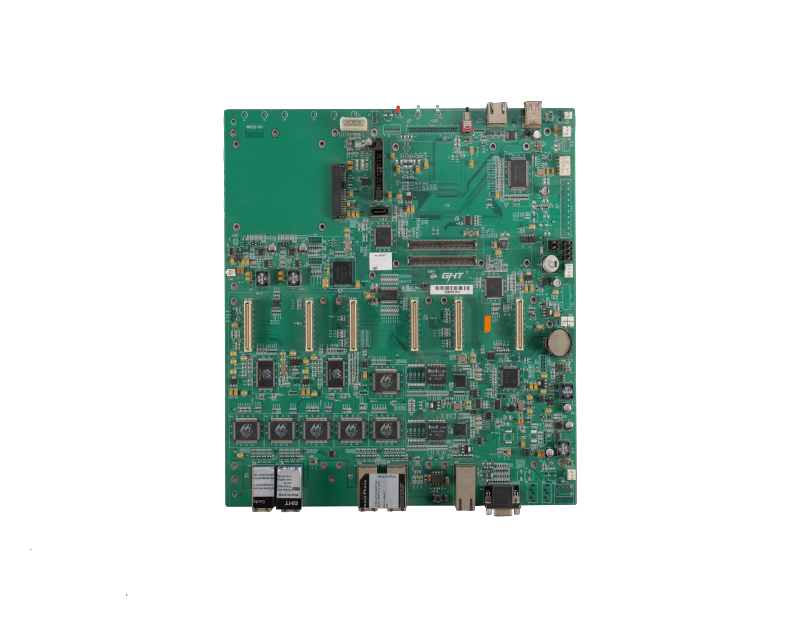
Choosing PCB board materials
When choosing PCB board materials, whether for home electronics or industrial equipment, quality is paramount in the manufacture of any type of circuit board. The components that include printed circuit boards may be large or small, cheap or expensive, but importantly, the relevant items perform excellently throughout their expected lifespan.
While there are many types of PCB materials for manufacturing circuit boards, product reliability is the ultimate goal sought by consumers and businesses in products using circuit boards. Of course, it is also crucial that the PCB board material is strong enough to hold together even if the components are accidentally dropped or impacted laterally.
For example, on computerized equipment, durable PCBs ensure hardware upgrades can be performed without damaging the existing PCB board material. The same is true for electronic devices, microwave ovens, and other household appliances that rely on PCB technology to function. Even in electronic public utilities such as ATMs, PCBs must operate without failure so that buttons function correctly and commands are understood promptly.
Previous
Previous :
Next :
RECOMMENDED NEWS
High-end Custom Services: SMT Chip Processing Meets Diverse Industry Needs



(Telephone contact)
Email:
Address: Room 502, Building 1, No. 13, Bohua 4th Road, Huangpu District, Guangzhou City
COPYRIGHT © 2025 Guangzhou Tongsen Electronic Technology Co., Ltd. All rights reserved.