Welcome to Guangzhou Tongsen Electronic Technology Co., LTD. Website!


PCB assembly
Given that printed circuit board assembly (PCB assembly) is a crucial and challenging process in the electronics industry, trusting the right PCB assembly China manufacturer is essential for obtaining well-made and fully functional products.
Our daily lives are being impacted by the rapid advancements in global contemporary technologies. Our lifestyles have fundamentally changed as a result. This technological development has brought about many advanced technologies globally, technologies that were unimaginable even a decade ago.
Printed Circuit Boards (PCBs) are at the heart of these devices; they are the core of these devices (PCBs).
This guide will take you through the PCB assembly process, from buying guides to PCB assembly services, to testing your final product.
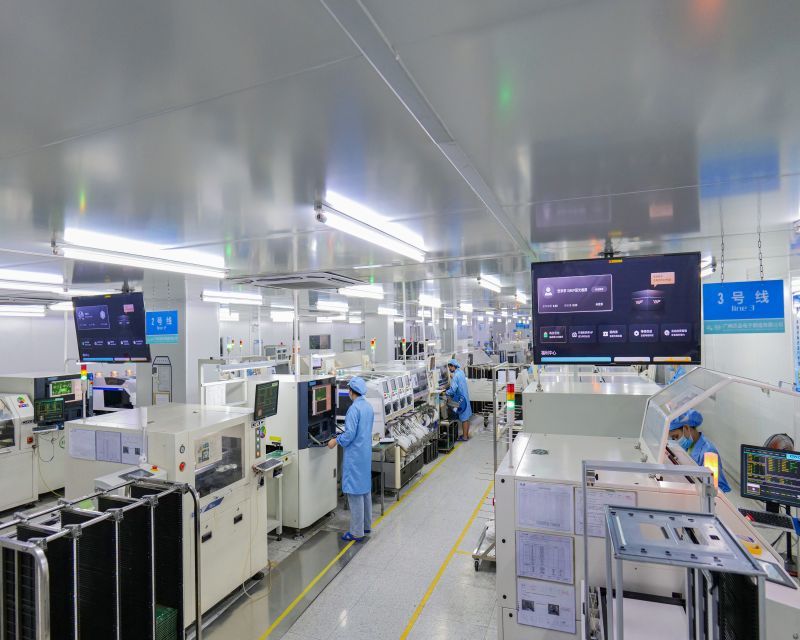
Introduction to PCB Assembly
A printed circuit board (PCB) is a rigid body that contains various electrical components, usually green. PCB
Assembly (referred to as PCBA) is the process of soldering these components onto the PCB. PCBs contain multiple layers, including a fiberglass substrate, components, and copper layers that form the traces.
Additionally, it has holes where components can be placed, with inner and outer layers.
Printed circuit boards are used in a variety of electrical devices, which is especially prevalent in today's modern culture. It's no surprise that printed circuit board assembly (PCB assembly) can be considered one of the most crucial procedures in the electronics industry.
This article aims to provide you with fundamental information regarding the processes involved and the equipment used in PCB assembly.
PCBs play a significant role in today's technology-driven world. Because they are present in almost every electronic device, these boards are the cornerstone of the industry.
Compared to other production formats in the same field.
PCB assembly has the following significant advantages:
1. Using PCB assembly services, you will be able to manage a large number of orders at once and work in batches. Using PCB assembly services saves money and time and minimizes unnecessary waste.
2. If your resources are limited, including printed circuit boards (PCBs) easily increases production. Small-scale manufacturers will greatly benefit from this solution.
3. A major benefit of using PCB assembly services is always a significant reduction in your overall administrative costs over time.
4. Small companies face significant difficulties when operating under the principle of economies of scale. A simple solution is to integrate PCB assembly and accept bulk orders.
5. With PCB assembly, testing and diagnostics become simple. Identifying and correcting any production issues using simple diagnostic tests is now easier than ever.
6. PCBs are a space-saving technology. PCB components can be as thin as a human hair.
PCB Board Assembly?
When a customer places an order to purchase PCB components, the PCB component company will first develop a PCB component prototype based on the customer's design and requirements.
Many steps in PCB component manufacturing include applying solder paste to the board, picking and placing components, soldering, inspection, and testing.
These steps are necessary and must be managed to ensure a quality product is delivered.
Stage One: Solder Paste Printing
This stage is the same regardless of the type of PCB component. A stencil made of thin metal sheet can cover the circuit board. It ensures that the solder paste can be specifically applied to the areas where the components will be inserted. Once the solder paste is applied, the stencil is removed from the circuit board.
Stage Two: Component Placement (Pick and Place)
Pick and place operations can be done manually or mechanically through automated systems to install components. In through-hole PCB construction, components are indeed manually installed. Automated machines can be used for surface mount PCB assembly. Automated component placement provides fast, accurate, and error-free operation.
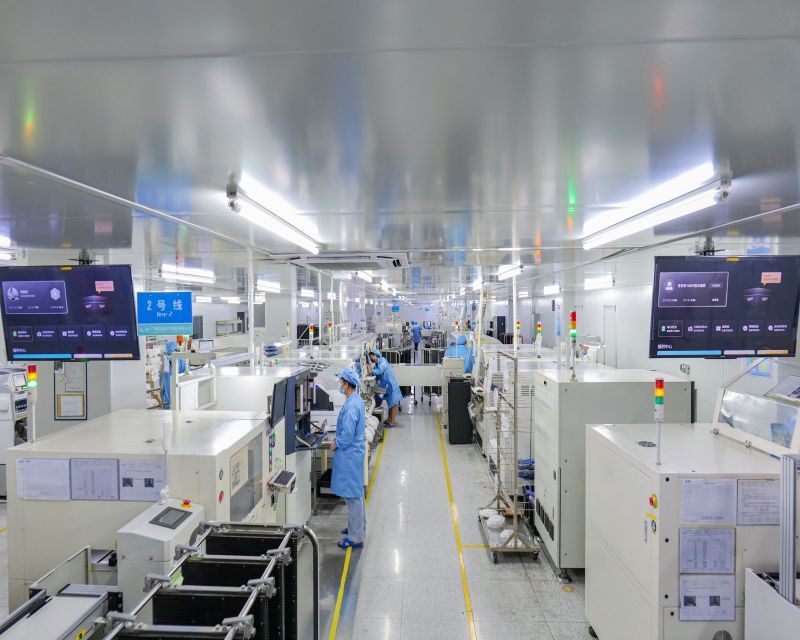
Stage Three: Soldering
Soldering is indeed used to connect the components on the printed circuit board (PCB). The wave soldering process is indeed used for through-hole assembly. On the other hand, reflow soldering is indeed used for the construction of surface mount PCBs.
Stage Four: Inspection and Quality Testing
Inspection and quality testing are performed to ensure that the equipment is functioning properly.
Stage Five: Feedback Testing
For PCB assembly service providers, it is crucial to monitor the output of the manufacturing process to ensure the smooth progress of PCB assembly.
Summary
Given that printed circuit board assembly (PCB assembly) is a crucial and challenging process for the electronics industry, trusting the right PCB assembly China manufacturer is essential for obtaining well-made and fully functional products.
RECOMMENDED NEWS
High-end Custom Services: SMT Chip Processing Meets Diverse Industry Needs



(Telephone contact)
Email:
Address: Room 502, Building 1, No. 13, Bohua 4th Road, Huangpu District, Guangzhou City
COPYRIGHT © 2025 Guangzhou Tongsen Electronic Technology Co., Ltd. All rights reserved.