Welcome to Guangzhou Tongsen Electronic Technology Co., LTD. Website!


How to perform SMT soldering in commercial PCBA projects
For most manufacturers, AOI is part of internal quality control, helping to reduce assembly defects and identify and eliminate problems early on. It uses cameras to capture images, comparing them to standard images to provide a visual understanding of soldering quality. Only products that pass AOI inspection can proceed to the next production stage, while problematic circuit boards require rework.
When dealing with complex circuit boards, various components such as ICs, resistors, capacitors, and connectors are frequently encountered. Although they all fall under the category of electronic components, different soldering techniques are required during assembly due to differences in pin density and packaging. With the increasing trend of electronic miniaturization, the pin density of components is becoming higher and higher, making SMT soldering the most ideal SMT assembly method.
What is SMT soldering?
We know that a PCBA board consists of two parts: the PCB and the components. The two are closely integrated, with the PCB providing support and connection for the components, and the components providing functionality for the electronic product. This integration process is assembly and soldering.
In modern PCB assembly processes, soldering mainly includes two techniques: reflow soldering and wave soldering. Generally, reflow soldering is used for surface mount device components, while wave soldering is used for through-hole device components. Although there can be some flexibility in certain situations, the cross-use of these techniques is uncommon due to significant differences in their working principles and designs.
SMT soldering focuses more on surface mount components and usually refers to reflow soldering. Surface mount components, such as ICs, diodes, and transistors, have short, dense, and small pins. In large-scale production, manual operation is significantly limited, making automation a necessary choice. SMT technology utilizes pick-and-place robots and SMT soldering machines to efficiently and accurately complete this assembly process.
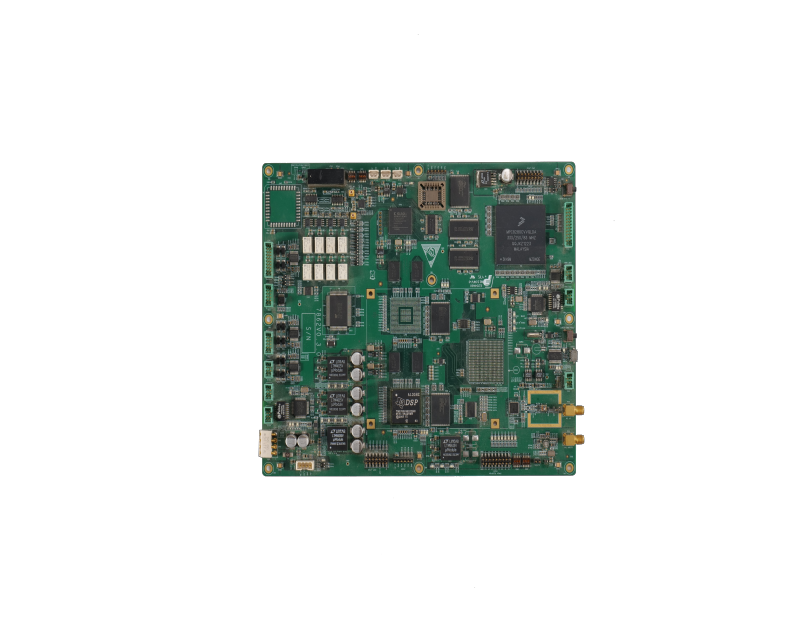
Four Stages of SMT Soldering
Stage One: Preheat
After SMT placement, the PCBA board enters the baking stage, marking the official start of surface mount soldering. Stage one is the preheating stage, where the oven gradually increases the temperature, and the lower-melting-point solvents in the solder paste begin to evaporate. Precise temperature control is crucial in this stage. Heating too quickly can lead to two main problems: thermal stress damage to components and solder paste collapse, leading to short circuits. It is recommended to increase the temperature at a rate of two to three degrees per second to ensure the robustness of the soldering process.
Stage Two: Soak
After the preheating stage, the soldering process enters the soak stage, during which the oven maintains a constant temperature to ensure that the volatile substances in the solder paste are completely removed. The key goal of this stage is to heat the metallic components in the solder paste to a sufficient temperature to melt them. This allows the solder paste to provide the necessary wettability and surface tension in the subsequent soldering process, ensuring the formation of uniform and reliable solder joints between the pins and the PCB pads. In addition, the soak stage helps to uniformly heat the entire PCBA board, preventing problems such as component warping or cold solder joints due to uneven heat distribution.
Stage Three: Reflow
Reflow soldering is a crucial step in the soldering process and is also a stage where soldering defects are easily prone to occur. Manufacturers set the high temperature of the furnace according to the specifications of temperature-sensitive components and begin cooling immediately upon reaching the peak temperature. The duration of the entire reflow soldering process is typically 30 to 60 seconds. The key is to strictly control the rate of temperature rise and fall to avoid applying excessive heat to the components, thus preventing damage caused by thermal shock.
In the actual SMT soldering process, flux is often used to reduce the surface tension of the solder joint metal, so that when the solder reaches its melting point, it can form a well-bonded metallurgical connection, providing the necessary conditions for the mixing and melting of various solder powder balls, and ensuring the quality of the solder joint.
Stage Four: Cooling
After the reflow step, the PCBA board enters the cooling stage. At this time, the molten solder cools and solidifies, securing the PCB components. The temperature of the PCBA board during cooling is typically between 30 and 100 degrees, with an average cooling rate of approximately 3 degrees per second.
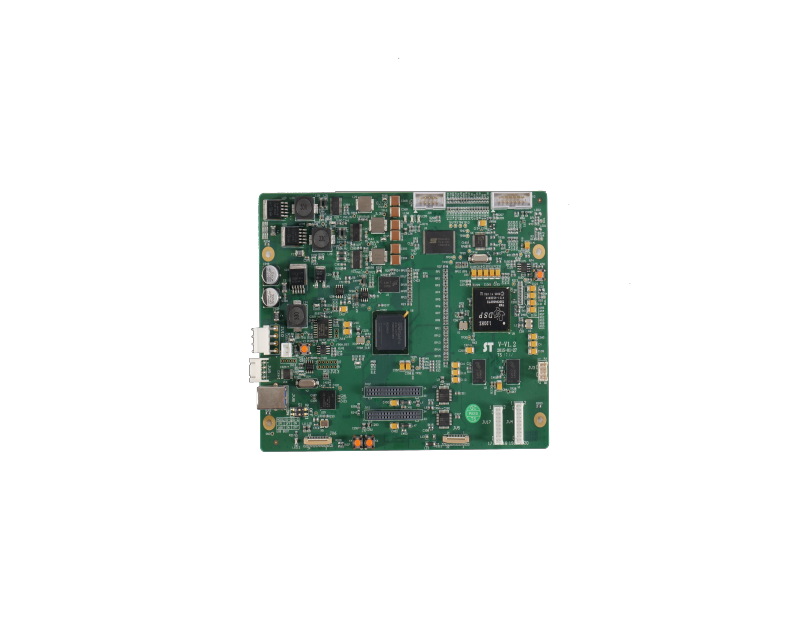
After SMT Soldering
Although SMT soldering mainly relies on automated equipment and can handle complex projects with fine-pitch and high-density circuit boards, uncertainties in the production process may lead to unexpected defects. SMT, as an intermediate step in PCB assembly services, requires error detection and correction, rather than post-assembly inspection, as this not only increases the difficulty of rework but can also lead to significant economic losses. Therefore, post-soldering inspection is essential!
Our SMT production line includes loaders, pick-and-place machines, printers, SPI inspection equipment, reflow ovens, and AOI inspection equipment. SPI is used to ensure the quality of solder paste printing and component placement before soldering, while AOI is used to inspect the quality of SMT soldering.
For most manufacturers, AOI is part of internal quality control, helping to reduce assembly defects and detect and eliminate problems early. It uses cameras to capture images, comparing them to standard images to provide a visual understanding of soldering quality. Only products that pass AOI inspection can proceed to the next production stage, while problematic circuit boards require rework.
RECOMMENDED NEWS
High-end Custom Services: SMT Chip Processing Meets Diverse Industry Needs



(Telephone contact)
Email:
Address: Room 502, Building 1, No. 13, Bohua 4th Road, Huangpu District, Guangzhou City
COPYRIGHT © 2025 Guangzhou Tongsen Electronic Technology Co., Ltd. All rights reserved.