Welcome to Guangzhou Tongsen Electronic Technology Co., LTD. Website!


How do PCB manufacturers handle short circuits on circuit boards?
Short circuits usually fall into two categories: firstly, the PCB has reached the end of its service life; secondly, inadequate inspection during the production process. Minor errors during production can severely damage the entire PCB, potentially leading to its scrapping. So how can we inspect and prevent short circuits on circuit boards?
Why do short circuits occur on circuit boards, and how can we troubleshoot them if they do occur?
Short circuits typically occur in two situations: first, when a PCB has reached the end of its useful life; second, when insufficient inspection occurs during the manufacturing process. These minor errors during production can significantly harm the entire PCB, potentially leading to its scrapping. So how can we inspect and prevent short circuits on circuit boards?
1. Open the electronic printed circuit diagram on the computer, highlight the shorted network, and see where it's located nearby; it may be connected to a single point. Pay special attention to short circuits inside ICs.
2. Use a short circuit locator analyzer, multilayer board short circuit detector, etc.
3. Be careful when soldering small surface-mount capacitors, especially power filter capacitors (103 or 104). They are numerous and easily cause a short circuit between the power supply and ground. Of course, sometimes bad luck means the capacitor itself may short circuit, so a good practice is to test the capacitor before soldering.
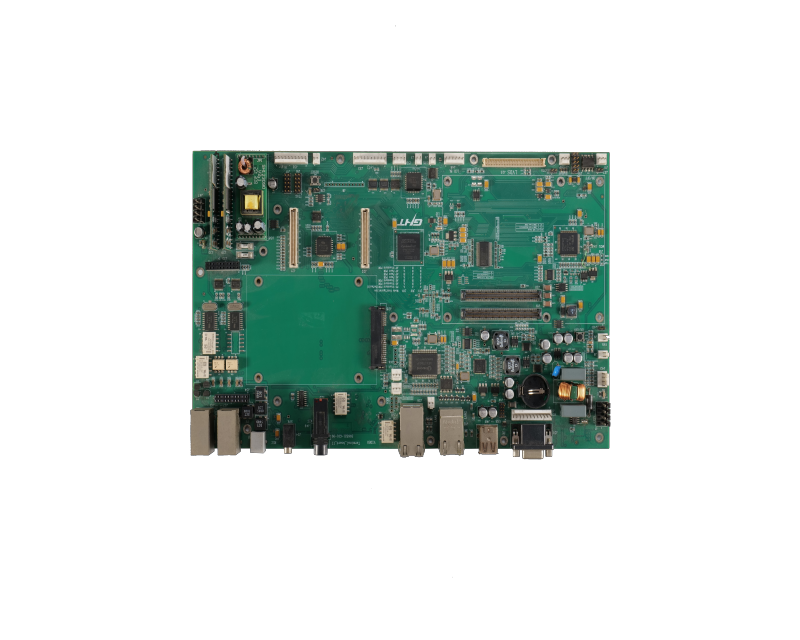
4. If soldering manually, develop good habits. First, visually inspect the custom PCB before soldering and use a multimeter to check for short circuits in key circuits (especially power and ground); second, after soldering each chip, use a multimeter to measure whether there is a short circuit between the power supply and ground; also, do not carelessly flick the soldering iron when soldering. If solder is flicked onto the pins of a chip (especially surface-mount components), it is difficult to detect.
5. If there are BGA chips, since all solder joints are covered by the chip and are invisible, and it is a multilayer board (4 layers or more), the power supply of each chip should be separated during design, and connected with magnetic beads or 0-ohm resistors. In this way, when the power supply and ground are shorted, the magnetic bead detection is disconnected, and it is easy to locate a specific chip. Because BGA soldering is more difficult, if it is not automatic machine soldering, it is easy to short-circuit the two solder balls of adjacent power supply and ground.
6. If a short circuit is found, the copper circuit board can be cut (especially suitable for single/double-layer boards), and then the functional blocks are powered on separately to eliminate them one by one.
Benefits of high-density SMT surface mount processing for circuit boards
The development path of SMT prototyping and small-batch processing is rapidly developing towards high density. With the development of electronic technology, the market also demands more miniaturization and precision of electronic products. Nowadays, SMT surface mount processing technology is increasingly widely used in the electronics industry. In order to achieve miniaturization, thinning, lightweight, and multi-functionality of electronic products, the design requirements for circuit boards are becoming increasingly stringent, and the technical requirements are becoming increasingly high.
SMT surface mount processing assembly has relatively high density, light weight, and lightweight electronic components. The volume and total weight of surface mount components are only about 1/10 of traditional plug-in components. Generally, after using SMT, the volume of electronic components can be reduced by 40%~60%, and the total weight can be reduced by 60%~80%. High reliability, strong vibration resistance. Low spot welding defect rate. Good high-frequency performance. Reduce electromagnetic and radio frequency interference. Easy to implement automation technology to improve productivity. Cost control can reach 30%~50%. Save raw materials, electricity, machinery and equipment, human resources, and time. High-density SMT surface mount prototyping processing has many advantages, and many electronic OEM processing orders use high-density surface mount processing.
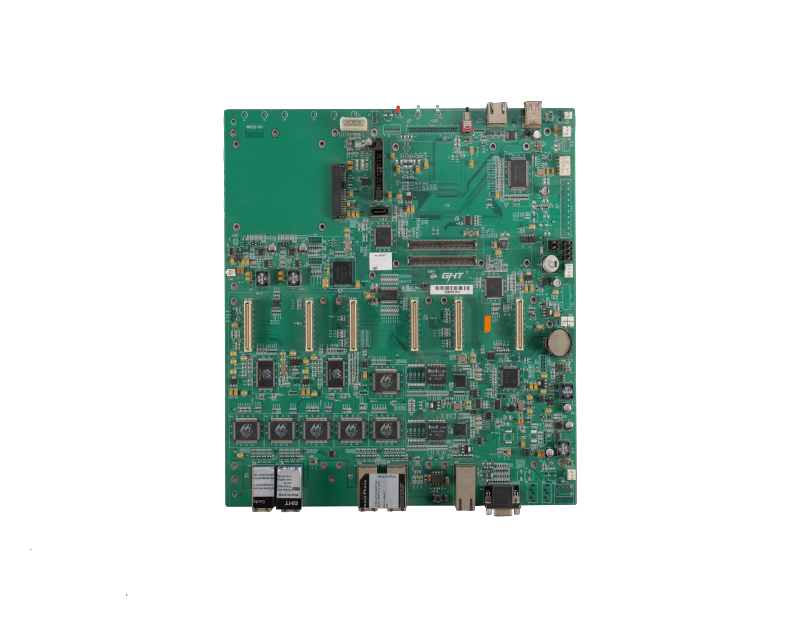
Benefits of High-Density SMT Surface Mount Processing:
1. Micro-holes have a low aspect ratio, and the signal transmission reliability is higher than that of general through-holes.
2. Micro-holes can improve the flexibility of circuit configuration and make circuit design easier.
3. Using high-density surface mount for the same electronic product scheme can reduce the size of the pcba circuit board, thereby reducing costs.
4. High-density SMT surface mount processing design can choose thinner dielectrics and lower potential inductance in the structure.
5. Using micro-hole interconnection can shorten the contact distance, reduce signal reflection and crosstalk between lines, and components can have better electrical performance and signal accuracy.
6. Using micro-holes and fine lines increases wiring density, improves the line capacity per unit area, meets the assembly requirements of high-density contact components, and is conducive to the use of advanced structures.
7. Micro-via technology can shorten the distance between the ground plane and the signal layer in the carrier board design, thereby improving radio frequency/electromagnetic wave/electrostatic discharge (RFI/EMI/ESD) interference. The number of ground wires can be increased to prevent electrostatic accumulation from causing instantaneous discharge and damaging components.
RECOMMENDED NEWS

High-end Custom Services: SMT Chip Processing Meets Diverse Industry Needs



(Telephone contact)
Email:
Address: Room 502, Building 1, No. 13, Bohua 4th Road, Huangpu District, Guangzhou City
COPYRIGHT © 2025 Guangzhou Tongsen Electronic Technology Co., Ltd. All rights reserved.