Welcome to Guangzhou Tongsen Electronic Technology Co., LTD. Website!


Overview and Development of GPU Chips
The development history of GPU chips showcases their evolution from simple graphics processors to multi-domain computing platforms. Their powerful parallel computing capabilities make them play a crucial role in modern computing.
The Graphics Processing Unit (GPU) is an indispensable component of computer hardware, primarily used to accelerate graphics rendering and parallel computing. Since its introduction, the applications of the GPU have expanded from initial graphics processing to encompass numerous fields, including scientific computing and deep learning. This article will delve into the fundamental principles of GPU chips, their development history, and their importance in modern computing.
Fundamental Principles of GPU Chips
A GPU chip is a specialized integrated circuit designed for handling complex graphics computations and parallel data processing. Unlike the Central Processing Unit (CPU), a GPU possesses a large number of processing cores, enabling it to execute numerous computational tasks simultaneously. Core design features of the GPU include:
Parallel Computing Capability: GPUs contain hundreds to thousands of small processing cores, capable of handling numerous computational tasks concurrently. This provides GPUs with a significant advantage when processing large-scale parallel data computations.
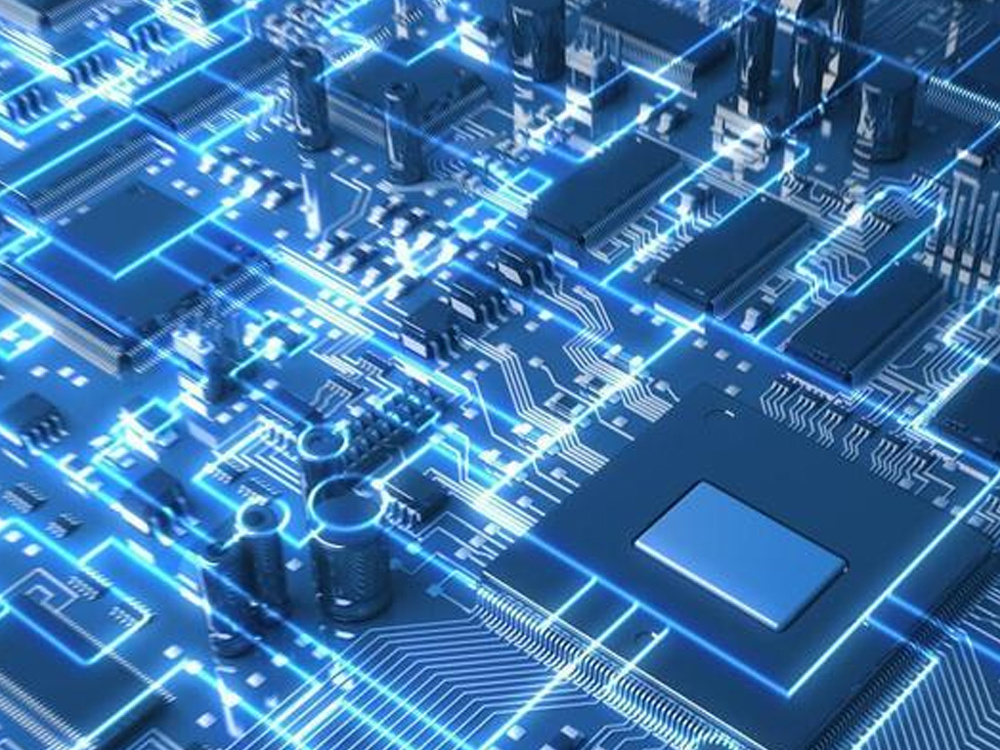
Specialized Computing Units: GPUs include multiple specialized computing units, such as Texture Processing Units (TPUs) and shader units, which are responsible for handling different types of graphics computation tasks.
High-Bandwidth Memory: To support efficient data transfer, GPUs are typically equipped with high-bandwidth video memory (such as GDDR6 or HBM). This memory allows for the rapid reading and writing of large amounts of data, improving computational efficiency.
Development History of GPUs
Early Development (1990s): Early versions of GPUs were primarily used for graphics rendering. For example, NVIDIA launched the GeForce 256 in 1999, considered a true GPU, whose main function was to accelerate graphics processing.
Graphics Rendering and Computation (2000s): With advancements in GPU technology, GPUs began supporting more complex graphical effects, such as dynamic lighting and shadows. At this time, GPUs were also gradually applied to scientific computing and data analysis, demonstrating their powerful parallel computing capabilities.
The Rise of Deep Learning (2010s): The computing power of GPUs was widely applied in the fields of deep learning and artificial intelligence. Platforms such as NVIDIA's CUDA (Compute Unified Device Architecture) allowed developers to utilize GPUs for efficient general-purpose computing, driving the rapid development of deep learning.
Future Development (2020s and Beyond): Currently, GPU chips are developing towards higher computing performance, lower power consumption, and higher integration. Simultaneously, with the development of quantum computing and heterogeneous computing, GPUs will continue to play an important role in emerging technologies.
Applications of GPUs in Modern Computing
Gaming and Graphics Rendering: GPUs were initially designed to accelerate computer games and graphics rendering. Modern GPUs can handle high-resolution images, complex 3D scenes, and real-time lighting effects, providing gamers with a realistic visual experience.
Scientific Computing and Simulation: The parallel computing capabilities of GPUs make them play an important role in scientific computing and simulation. For example, in fields such as climate simulation, fluid dynamics, and materials science, GPUs can accelerate complex computations and improve research efficiency.

Deep Learning and Artificial Intelligence: In deep learning, the high parallel computing capabilities of GPUs can significantly accelerate the neural network training process. Many deep learning frameworks, such as TensorFlow and PyTorch, support GPU acceleration, significantly improving the training and inference speed of AI models.
Big Data Analysis: GPUs are also widely used in big data analysis. They can quickly process and analyze massive amounts of data, improving the efficiency of data mining and real-time analysis.
Video Processing and Encoding: GPUs are also used for video processing and encoding tasks. By utilizing the powerful computing capabilities of GPUs, efficient video encoding and decoding, real-time video stream processing, and high-quality video rendering can be achieved.
Conclusion
The development history of GPU chips demonstrates their evolution from purely graphics processors to multi-domain computing platforms. Their powerful parallel computing capabilities make them play a crucial role in modern computing. From gaming and graphics rendering to scientific computing, deep learning, and big data analysis, the applications of GPUs are extensive and constantly expanding. With continuous technological advancements, GPUs will play an increasingly important role in more fields, driving the development and innovation of computer technology.
RECOMMENDED NEWS

High-end Custom Services: SMT Chip Processing Meets Diverse Industry Needs



(Telephone contact)
Email:
Address: Room 502, Building 1, No. 13, Bohua 4th Road, Huangpu District, Guangzhou City
COPYRIGHT © 2025 Guangzhou Tongsen Electronic Technology Co., Ltd. All rights reserved.