Welcome to Guangzhou Tongsen Electronic Technology Co., LTD. Website!


Materials used for printed circuit board substrates
Printed Circuit Board (PCB) substrate materials form the base layer of a PCB. They are typically composed of a combination of insulating materials (such as fiberglass or plastic) to provide mechanical support, electrical connections, and insulation.
Printed Circuit Board (PCB) substrate materials form the base layer of a PCB. They are typically composed of a combination of various insulating materials (such as fiberglass or plastic) to provide mechanical support, electrical connections, and insulation. Common PCB substrate materials include:
FR-4 (fiberglass-reinforced epoxy resin)
Polyimide
Rogers (polymer ceramic composite material)
Aluminum
The choice of substrate material depends on factors such as electrical performance, thermal resistance, and cost.
FR4
FR4 is a commonly used substrate material in printed circuit board manufacturing, made from a composite material of fiberglass and epoxy resin, possessing high mechanical strength and electrical insulation properties.
FR4 stands for "Flame Retardant 4." It is a laminated material commonly used as a substrate in PCB manufacturing. The "4" in the name refers to its classification according to the NEMA rating system, which defines the electrical and thermal properties of insulating materials used in the electronics industry.
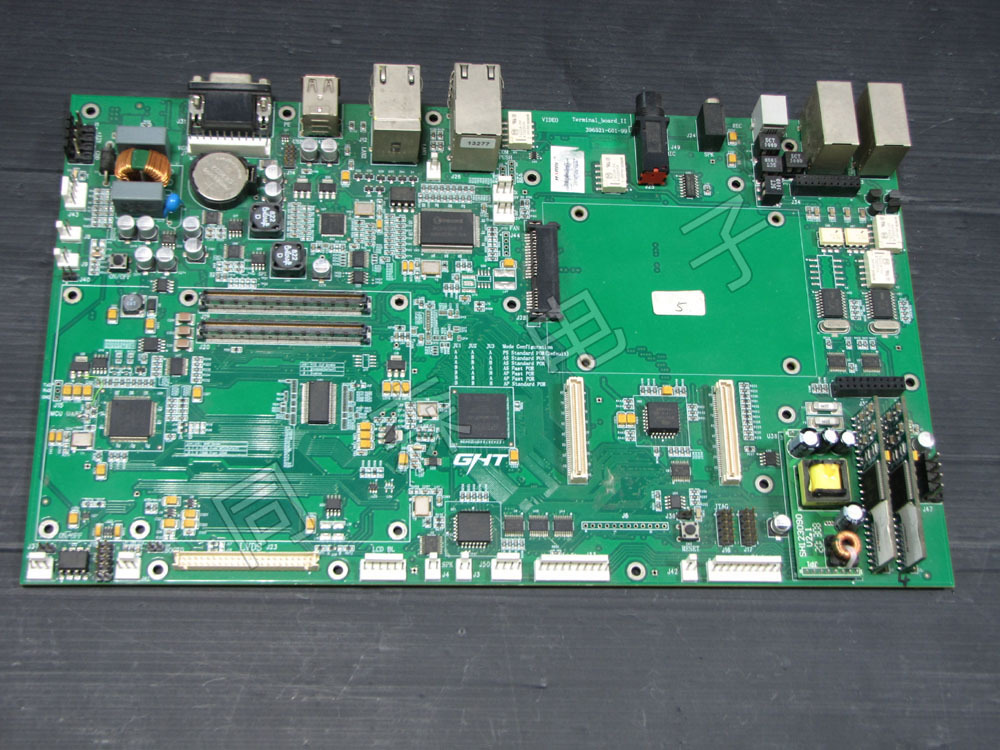
Advantages of using FR4 material in printed circuit boards include:
Wide availability: FR4 is widely used in the PCB industry and readily available, making it a cost-effective choice.
Good electrical insulation: FR4 has a high dielectric constant, making it an effective electrical insulator.
High mechanical strength: The fiberglass reinforcement in FR4 gives it high mechanical strength, suitable for high-stress applications.
Good temperature stability: FR4 has a relatively low coefficient of thermal expansion (CTE), allowing it to remain stable under temperature variations.
FR4 is widely used in a variety of electronic applications, ranging from consumer electronics to industrial control systems. It is also commonly used in the manufacturing of single-sided, double-sided, and multilayer PCBs.
Metal Core
Metal core PCBs (MCPCBs) are printed circuit boards that use a metal substrate such as aluminum or copper as the base material, instead of traditional insulating materials like fiberglass or plastic. Compared to traditional PCBs, metal cores offer better thermal conductivity, making them suitable for applications that generate significant heat, such as power electronics or high-power LED lighting.
Advantages of using metal core printed circuit boards include:
Improved thermal management: The metal substrate provides better heat dissipation compared to traditional PCBs, reducing the risk of heat damage to electronic components.
Higher operating temperature: Metal core PCBs can withstand higher operating temperatures, making them suitable for high-power applications.
Increased mechanical stability: The metal substrate provides higher mechanical stability, making metal core PCBs suitable for high-stress applications.
Reduced weight: Metal core PCBs are lighter than traditional PCBs, suitable for portable electronic devices and aerospace applications.
The choice of metal core material depends on factors such as thermal conductivity, weight, and cost. Aluminum and copper are commonly used metal core materials in MCPCBs, but other materials such as silver and nickel can also be used.

Polyimide
Polyimide PCBs are a substrate used in flexible printed circuits (Flex-PCBs). It offers several advantages, such as:
High-temperature resistance: Polyimide can withstand high temperatures, making it suitable for high-temperature applications.
Chemical resistance: Polyimide is resistant to most chemicals, including solvents and acids, making it a durable choice for harsh environments.
Flexibility: The flexibility of polyimide makes it ideal for applications requiring bending, twisting, or folding.
Lightweight: Polyimide is a lightweight material, reducing the overall weight of the flexible PCB assembly.
Improved electrical performance: Polyimide has good electrical insulation properties, resulting in improved electrical performance of the flexible PCB.
Overall, polyimide is a popular choice for flexible PCBs due to its combination of high-temperature resistance, chemical resistance, flexibility, lightweight nature, and improved electrical performance.
RECOMMENDED NEWS
High-end Custom Services: SMT Chip Processing Meets Diverse Industry Needs



(Telephone contact)
Email:
Address: Room 502, Building 1, No. 13, Bohua 4th Road, Huangpu District, Guangzhou City
COPYRIGHT © 2025 Guangzhou Tongsen Electronic Technology Co., Ltd. All rights reserved.