Welcome to Guangzhou Tongsen Electronic Technology Co., LTD. Website!


PCBA process overview
PCBA process refers to the precise installation and soldering of various electronic components (such as chips, resistors, capacitors, etc.) onto a printed circuit board (PCB) according to design requirements, forming a complete electronic product. It is a core process in electronic manufacturing, directly affecting the quality, performance, and reliability of the product.
PCBA processing involves the precise installation and soldering of various electronic components (such as chips, resistors, and capacitors) onto a printed circuit board (PCB) according to design requirements, forming a complete electronic product. It is a core link in electronic manufacturing, directly affecting the quality, performance, and reliability of the product.
Main Steps
PCBA processing includes several key steps, which can generally be divided into the following stages:
Raw Material Preparation:
PCB Preparation: According to the circuit design requirements, select the appropriate substrate material, usually a glass fiber reinforced epoxy resin board (FR-4).
Component Preparation: According to the bill of materials (BOM), procure and prepare the required electronic components, including chips, resistors, capacitors, connectors, etc.
SMT Surface Mount Technology:
Apply Solder Paste to PCB: Apply solder paste to the soldering positions on the PCB to secure the electronic components.
Component Placement: Use SMT equipment to precisely place surface mount components onto the solder paste.
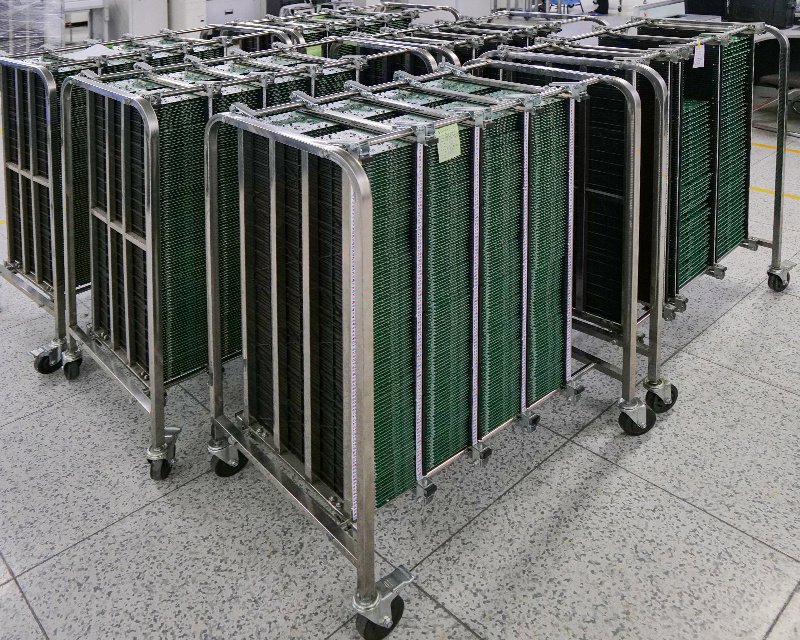
Soldering:
Reflow Soldering: Send the installed components and PCB together into a reflow oven, and heat to melt and solidify the solder paste, completing the soldering of the components to the PCB.
Quality Inspection:
AOI Inspection (Automated Optical Inspection): Use automated optical inspection equipment to check the soldering quality and ensure the correct installation and soldering quality of the components.
X-ray Inspection: Perform X-ray inspection of the solder joints to detect hidden soldering defects such as cold solder joints and short circuits.
Assembly and Testing:
Plug-in Assembly: Install non-SMT components (such as sockets and switches).
Functional Testing: Perform functional testing on the assembled circuit board to ensure that all components and connections are working properly.
Packaging and Shipping:
Anti-static Packaging: Pack the qualified PCBA in anti-static packaging and prepare for shipment to downstream assembly or directly to the client.
Key Technologies and Challenges
Key technologies in PCBA processing include, but are not limited to:
Development of SMT Technology: Advances in SMT technology have led to increasingly miniaturized components, significantly improving density and production efficiency.
Soldering Process Control: Precise control of soldering temperature, time, and atmosphere is crucial to avoid soldering defects.
Quality Inspection Technology: The application of high-precision inspection equipment such as AOI and X-ray has improved the accuracy and efficiency of inspection.
Automation and Intelligence: The degree of automation of PCBA production lines is increasing, and the application of intelligent manufacturing technology has improved production efficiency and consistency.
Common challenges in PCBA processing include component supply chain management, fine manufacturing process control, establishment of quality management systems, and training and improvement of technical personnel.

Application Areas
PCBA processing is widely used in various fields of electronic product manufacturing, including but not limited to:
Consumer Electronics: Such as smartphones, tablet computers, household appliances, etc.
Industrial Control Systems: Automated equipment, robot control, factory automation, etc.
Communication Equipment: Routers, modems, communication base stations, etc.
Medical Equipment: Medical monitoring equipment, diagnostic equipment, medical imaging equipment, etc.
Summary
As a key link in electronic product manufacturing, PCBA processing ensures the optimization of electronic products in terms of performance, reliability, and cost-effectiveness through refined processes and advanced technical equipment. With continuous technological advancements and expanding application needs, PCBA processing will continue to develop and improve, providing a solid foundation and support for the development of the electronics industry.
RECOMMENDED NEWS
High-end Custom Services: SMT Chip Processing Meets Diverse Industry Needs



(Telephone contact)
Email:
Address: Room 502, Building 1, No. 13, Bohua 4th Road, Huangpu District, Guangzhou City
COPYRIGHT © 2025 Guangzhou Tongsen Electronic Technology Co., Ltd. All rights reserved.