Welcome to Guangzhou Tongsen Electronic Technology Co., LTD. Website!


What is SMT manufacturing and how can skills management improve it?
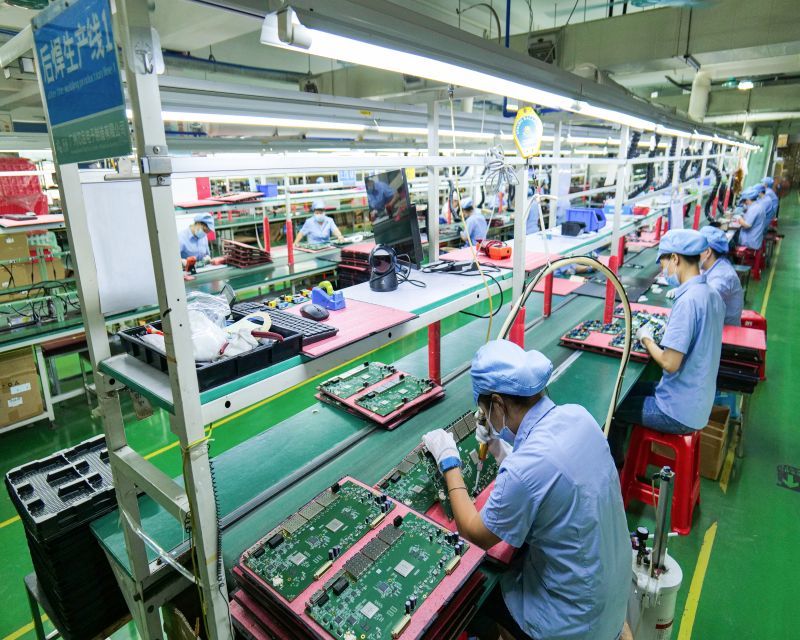
Surface Mount Technology (SMT) manufacturing is a method of constructing electronic circuits where components are mounted or placed directly onto the surface of a printed circuit board (PCB). In this article, we will explore the process, its advantages, factors influencing the SMT market, and of course, how skills management can help improve SMT manufacturing processes.
Surface Mount Technology (SMT) manufacturing is a method of constructing electronic circuits where components are directly mounted or placed onto the surface of a printed circuit board (PCB). In this article, we will explore the process, its advantages, factors influencing the SMT market, and of course, how skills management can help improve SMT manufacturing processes.
What is SMT Manufacturing?
SMT manufacturing has largely replaced through-hole technology, which involves inserting components into holes drilled in the PCB. It has also become an integral part of the assembly and production processes in the semiconductor industry. According to market analysis, the SMT market is projected to grow from \$5.7 billion in 2023 to \$8.24 billion in 2028.
Regarding the reasons, we have analyzed the following:
SMT eliminates the need to drill holes in the PCB, saving space and enabling the production of smaller electronic devices;
SMT components can be placed on both sides of the PCB and can be placed closer together, meaning more compact and denser circuits can be created;
SMT is compatible with automated assembly processes, resulting in greater precision and efficiency compared to manual assembly.
SMT makes the connections between components shorter and more direct, thus better enabling higher-speed processing and communication in electronic devices.
What factors are influencing the SMT market?
Significant growth in the SMT market is anticipated in the near future, driven by a multitude of factors, but several stand out. These include:
Automation and Robotics
As SMT manufacturing lends itself to automated production processes, integrating advanced automation and robotics technologies into SMT assembly lines can achieve higher precision, faster production speeds, and better quality control, thus improving overall manufacturing efficiency.
Miniaturization of Electronic Devices
The increasing demand for smaller, more powerful electronic devices, both in consumer and commercial sectors, necessitates increasingly precise and complex components and manufacturing processes, such as those used in SMT manufacturing.
Electric Vehicles
Research by the European Free Trade Association shows that new electric vehicle registrations increased by 57.4% in the first quarter of 2020. Since electric vehicle engines rely heavily on PCBs, the demand for SMT is expected to continue rising.
How Skills Management Can Help Address the Challenges in the SMT Industry
Despite the optimistic outlook for the SMT market, the industry still faces challenges that could delay or stall production.
However, the right skills management software can play a key role in helping organizations navigate these skills, providing a clear overview of the skills needed to ensure smooth SMT manufacturing processes - thus ensuring that skills gaps are easily identified and addressed before they become problematic.
Let's look at some of the more prominent challenges facing the SMT industry, and how proper skills management can help organizations overcome them.

Environmental Regulations
With growing environmental concerns, the SMT market faces increasing pressure to adopt sustainable manufacturing practices and comply with stringent environmental regulations. This includes reducing the use of hazardous materials, minimizing e-waste generation, and implementing energy-efficient production processes.
Here, you can use skills management software to track the status of various qualifications and certifications related to environmental compliance. These might include:
ISO 14001 Certification. A globally recognized certification from ISO that demonstrates a company's commitment to implementing and maintaining an effective environmental management system, including practices to reduce environmental impact and comply with relevant regulations. AG5 provides a free certification guide for ISO 14001 certification.
Certified Energy Manager (CEM). Offered by the Association of Energy Engineers (AEE), CEM certification demonstrates a professional's expertise in managing energy efficiency programs, implementing sustainable energy solutions, and ensuring compliance with environmental regulations.
Certified Hazardous Materials Manager (CHMM). Offered by the Institute of Hazardous Materials Management (IHMM), this certification demonstrates a company's ability to proficiently manage hazardous materials, including their safe handling, storage, transportation, and disposal, which is crucial for ensuring compliance with environmental regulations.
OSHA 30-Hour General Industry Certification. While not specifically focused on environmental compliance, OSHA's general industry certification demonstrates an understanding of workplace safety and health regulations, which is essential for ensuring a safe and compliant work environment within the context of environmental regulations.
RECOMMENDED NEWS
High-end Custom Services: SMT Chip Processing Meets Diverse Industry Needs



(Telephone contact)
Email:
Address: Room 502, Building 1, No. 13, Bohua 4th Road, Huangpu District, Guangzhou City
COPYRIGHT © 2025 Guangzhou Tongsen Electronic Technology Co., Ltd. All rights reserved.