Welcome to Guangzhou Tongsen Electronic Technology Co., LTD. Website!


7 Frequently Asked Questions about PCB Assembly Services You Can't Miss
If the PCBA has BGAs, X-ray testing is performed before reflow soldering. Depending on different product requirements, PCB assembly services can also include PCB cleaning, PCBA functional testing, thermal aging testing, four-terminal sensing, conformal coating, IC programming, and final product assembly.
There are so many PCB assembly companies on the market. How to choose reliable and cost-effective PCB assembly services from various PCB service providers? How to reduce PCB assembly costs without sacrificing product quality? In this article, you will get answers to common questions about PCB assembly services.
Common Question 1: What is PCB Assembly Service?
PCB assembly service is also known as circuit card assembly service, printed circuit board assembly service, and electronic assembly.
PCB assembly service is a part of electronics manufacturing, which mounts electrical parts onto printed circuit boards through surface mount technology (SMT) and through-hole technology (THT).
Usually, original equipment manufacturers (OEMs), research institutions, or commercial manufacturers do not manufacture and assemble the printed circuit boards they design, but outsource PCB manufacturing and assembly to PCB assembly service providers.
If you need PCB assembly services, you should provide the documents required for PCB assembly, including Gerber, BOM, and pick-and-place files. The CAM and BOM engineers of the PCB assembly factory will review your documents to ensure manufacturability.
After PCB assembly, your PCB design will be made into real modules or semi-finished products. PCB assembly service providers such as PCBONLINE can further assemble them with housings into final products.

Common Question 2: How much does it cost to assemble a PCB at a PCB assembly factory?
The price of PCB assembly ranges from $3 or $4 to hundreds of dollars, depending on the complexity of the PCB, the number and type of components, and the PCB assembly method (automatic or manual).
PCB Complexity: The more complex the PCB (such as HDI, high-frequency, rigid-flex boards), the higher the PCB manufacturing and assembly costs. If the PCB needs drilling, such as buried holes, blind holes, micro-vias, etc., its manufacturing cost will be higher than that of PCBs that do not need drilling. If the PCB is designed for fine pitch (high-density wiring), its assembly service cost will be higher.
Components: The more components required for the PCB, the higher the cost. If the PCBA has expensive components, such as ICs and FPGAs, the assembly cost will also be higher. Brand-new OEM components are better and more expensive than aftermarket or refurbished components.
Assembly Method: Automatic PCB assembly is more expensive than manual assembly. Automatic assembly has stable quality and high precision, while manual assembly has a high scrap rate. The cost of starting up an SMT assembly line is about $1000 each time.
The larger the number of PCB assemblies, the lower the unit price of PCB assembly services.
In addition, the reflow soldering temperature required for lead-free PCB assembly is higher than that of leaded assembly, so the cost of lead-free assembly is higher.
Common Question 3: How to reduce PCB assembly service costs without sacrificing quality?
To reduce PCB assembly service costs without sacrificing product quality, you can do the following:
1. Choose a reliable and cost-effective PCB assembly factory. You should ask the PCB assembly factory these questions: How does the PCB assembly factory view fine-pitch assembly? What is the smallest passive package size it can handle? Does it handle lead-free assembly? Can it perform IC programming, conformal coating, four-terminal sensing, etc., on advanced PCBs? Which suppliers does the PCB assembly factory source components from? You can always ask about the PCB assembly details you are concerned about before cooperating with the PCB assembly factory.
2. Ask the PCB assembly factory to source components instead of purchasing them yourself. PCB assembly factories purchase electrical parts at bulk prices, and the component cost is lower than purchasing them yourself. In addition, you also need to pay for the shipping of the components. But you need to pay attention to which suppliers the PCB assembly factory sources components from.
3. Provide the PCB assembly factory with a complete and clear BOM and pick-and-place file. The BOM should specify the required component reference, manufacturer, quantity, description (value, tolerance, package), P/N, and manufacturer P/N. The pick-and-place file should specify the component reference, package, angle, X and Y coordinates, and orientation. In addition, you can also provide assembly drawings for first-article inspection, 3D drawings of the PCBA, schematics, and test documents specifying the final product testing procedures and methods.
4. Ask the PCB assembly factory to perform Design for Test (DFT) and Design for Manufacturing (DFM). For good results, perform Design for Excellence (DFX). Don't worry about the extra service fees, because DFM, DFT, and DFX can reduce the risk of problems during PCB assembly or product use.
5. Optimize the PCB design. Optimizing the PCB design does not mean sacrificing product functionality or quality. Under the premise of maintaining the expected effect, the PCB shape can be designed as a regular square or rectangle to reduce the complexity of the circuit.
Common Question 4: How is a PCB assembled?
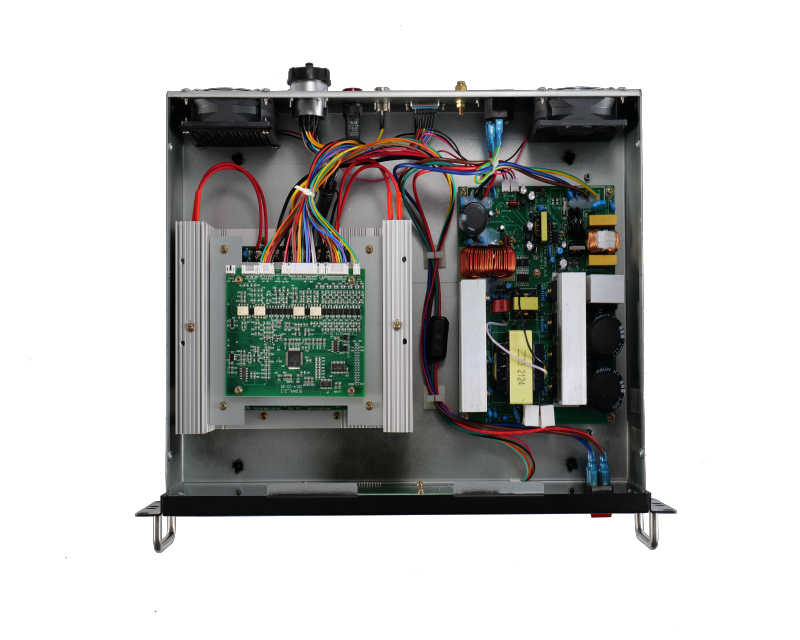
The PCB assembly process varies depending on the requirements of the circuit board, such as halogen-free, lead-free, fine-pitch, double-sided, etc. But the basic steps are PCB/Gerber file inspection, BOM inspection, component procurement, PCB and SMT stencil manufacturing, SMT assembly, and PTH assembly.
Common Question 5: What is the SMT assembly process?
Step 1. Inspect the PCB and components. Place the PCB on the feeder. Passive SMDs with package sizes of 0201, 0402, 0603, and 0804 are placed in component reels of high-speed pick-and-place machines. Passive SMDs with package sizes larger than 0804 (such as BGA, SOP, and QFP) are placed in component reels of functional pick-and-place machines.
Step 2. The PCB is fed into the SMT solder paste printer one by one, and solder paste is printed on the PCB pads.
Step 3. Solder paste inspection (SPI). The SPI machine checks the shape and thickness of the solder paste on the PCB. Qualified solder paste printing should completely cover the required PCB pads, with a thickness ranging from 0.09mm to 0.15mm, depending on product requirements.
Step 4. SMD assembly. The PCBs are fed into high-speed and functional pick-and-place machines one by one. SMDs are automatically picked and placed on the required PCB pads.
Step 5. Reflow soldering. The PCBAs are fed into the reflow soldering oven one by one. In the oven, the PCBA is preheated, heated, and gradually cooled. During this process, the solder paste melts and solidifies, soldering the SMDs to the circuit board.
Step 6. Automated Optical Inspection (AOI). PCBA boards are fed into the AOI machine one by one. An infrared camera scans the surface of the PCBA, and the machine analyzes the image, comparing it to the set parameters. The AOI technician observes the machine screen and records any potential problems (if any).
If any problems are found with the PCBA, it is returned for rework. Reworked PCBAs are kept separate from other PCBAs.
Common Question 6: What is the process for PTH assembly?
PTH assembly, or DIP, is semi-automated.
Step 1. The DIP technician inserts the PTH component leads into the required PTH holes. This operation is done manually.
Step 2. Wave soldering. The PCBAs are fed into a preheating machine and wave soldering furnace one by one. In the wave soldering furnace, the gap between the PTH component leads and the PTH hole walls is filled with liquid tin. The PCBA then cools naturally.
Step 3. Technicians trim the PTH leads to 2mm and package the PCBA. The PCBA is then shipped.
If the PCBA has BGAs, X-ray testing is performed before reflow soldering. Depending on different product requirements, PCB assembly services can also include PCB cleaning, PCBA functional testing, thermal aging testing, four-point sensing, conformal coating, IC programming, and final product assembly, etc.
RECOMMENDED NEWS
High-end Custom Services: SMT Chip Processing Meets Diverse Industry Needs



(Telephone contact)
Email:
Address: Room 502, Building 1, No. 13, Bohua 4th Road, Huangpu District, Guangzhou City
COPYRIGHT © 2025 Guangzhou Tongsen Electronic Technology Co., Ltd. All rights reserved.