Welcome to Guangzhou Tongsen Electronic Technology Co., LTD. Website!


SMT manufacturability design
Both SMT and through-hole assembly hold their places in the electronics industry. Understanding their advantages and limitations is crucial for making informed decisions for each project.
Designing a circuit board that is difficult to manufacture, repair, or test can be costly. To avoid this, it is crucial to consider manufacturability during the design phase. This means designing a product that can be produced cost-effectively, with high quality, and brought to market quickly. A well-designed circuit board requires fewer iterations, reduces labor and material costs, and shortens production time.
Here are some tips to help you achieve this goal:
Stick to standard sizes and shapes: By using standard PCB form factors, you can leverage existing manufacturing infrastructure and minimize the need for manual setups. This approach shortens production time and reduces overall costs.
Choose components wisely: Be sure to select surface mount devices that save space or simplify the manufacturing process. SMDs should be capable of automated placement and withstand the expected reflow soldering temperature. Components with solder-plated terminals should be selected as they aid in accurate centering during placement.

Avoid using unmarked SMD components: Unmarked components can lead to confusion and problems during field repairs. Therefore, unless the cost difference is significant, or you have other reasons to use them (e.g., protecting your design from reverse engineering), use marked components whenever possible.
Use qualified components: Stick to components that have been tested and proven to withstand the manufacturing process. This will help avoid potential problems during production and service.
Limit variety: By minimizing the number of different component types, the process of creating standard pad patterns is simplified, and the complexity of supplier management is reduced. This approach minimizes machine downtime, the number of reel changes, and waste from unused components on reels, which have a significant and direct impact on costs.
Align and space components correctly: Try to align similar components in the same direction and maintain sufficient package spacing between them. Uniform component placement aids in inspection, soldering, and testing. Smaller package spacing is needed to meet various manufacturing requirements.
Handle through-holes carefully: Avoid placing through-holes inside surface mount pads. This helps ensure sufficient solder fillets during reflow soldering. If through-holes must be placed inside pads, they should be filled by the PCB manufacturer.
Design for testability: To ensure effective testing, all unused pins should be connected to ground or power via resistors. Dual-sided test probing should be avoided to reduce fixture and testing costs. Implement one ground test point (TP) and one power test point (TP) per 10 ICs to minimize ringing risks.
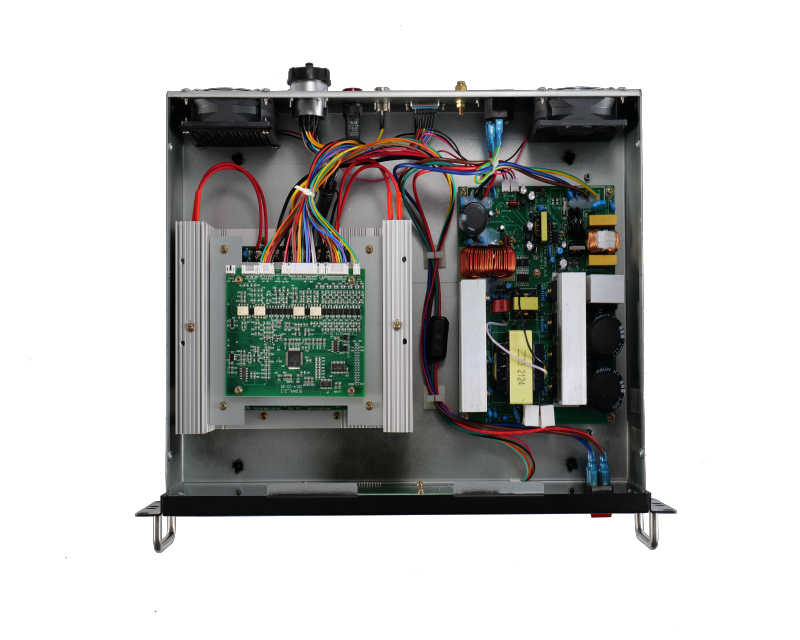
By adopting these strategies, you can design products that are easier to manufacture, leading to lower costs and shorter time to market, as well as improved overall product quality and reliability.
The choice between SMT and THT assembly depends on various factors and requirements. SMT assembly offers advantages such as high component density, light weight, good electrical performance, ease of automation, and cost efficiency. However, it also presents challenges in quality control, repairability, part identification, sensitivity to heat and moisture, and cleanliness requirements.
On the other hand, THT offers robust component connections, reliable performance at high temperatures, ease of prototyping and debugging, and enhanced testability. But it does have limitations in increasing PCBA size and cost, lower component density, and inability to handle fine-pitch components.
The choice of assembly method should consider the specific application's needs, including high-speed/high-density requirements, lightweight and compact solutions, high-volume production, reliability and performance requirements, and manual assembly or prototyping scenarios.
Both SMT and through-hole assembly have their place in the electronics industry, and understanding their advantages and limitations is crucial for making informed decisions for each project.
RECOMMENDED NEWS

High-end Custom Services: SMT Chip Processing Meets Diverse Industry Needs



(Telephone contact)
Email:
Address: Room 502, Building 1, No. 13, Bohua 4th Road, Huangpu District, Guangzhou City
COPYRIGHT © 2025 Guangzhou Tongsen Electronic Technology Co., Ltd. All rights reserved.