Welcome to Guangzhou Tongsen Electronic Technology Co., LTD. Website!


Status Quo and Development Trend of PCB Industry in 2024
In the future, the printed circuit board industry will continue to expand into new application areas. With the rapid development of the Internet of Things and intelligent vehicles, PCBs will need stronger data processing and intelligent control capabilities to achieve interconnectivity and automated management between devices. For example, in the Internet of Things field, due to the large number of devices, a large amount of data transmission is required, and the demand for printed circuit boards will greatly increase.
Printed circuit boards (PCBs) are core components of contemporary electronic products; almost all electronic products require the support of PCBs. With the rapid development of technology and the continuous expansion of the electronics industry, the PCB industry has ushered in unprecedented opportunities and challenges.
This article will elaborate on the current state and future development trends of the printed circuit board industry.
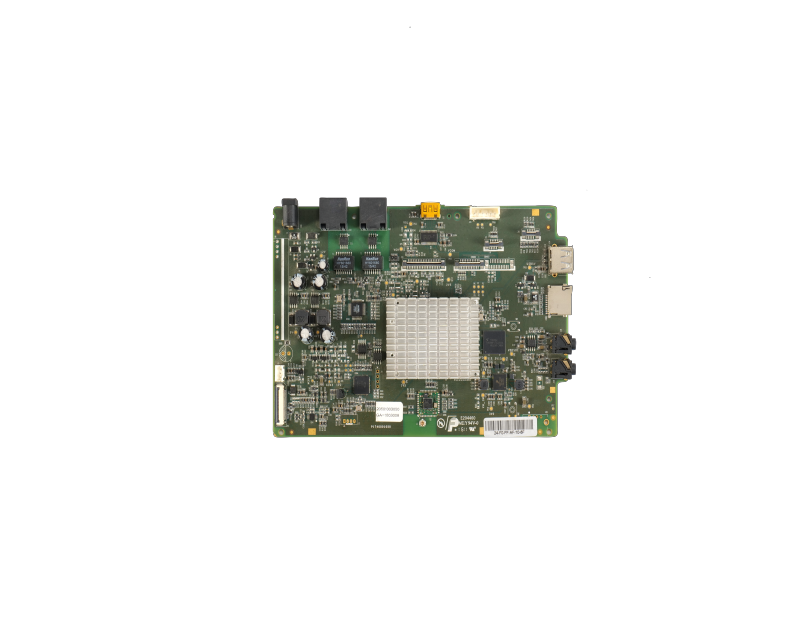
What is the current state of the PCB industry?
Currently, the global PCB industry is highly competitive, mainly concentrated in Asia, especially in countries such as China, Japan, and South Korea. These countries possess advanced manufacturing technologies and mature supply chain systems, enabling them to efficiently meet the needs of global customers. At the same time, the global PCB industry also faces several challenges, such as environmental protection, raw material supply, and labor costs.
1. Market Prospects
In recent years, the printed circuit board industry has continued to expand globally, with market size increasing year by year. According to data from market research institutions, the global printed circuit board market size in 2023 has reached approximately US$700-750 billion. With the rapid development of emerging technologies such as 5G, the Internet of Things, and artificial intelligence, the printed circuit board industry will see even greater market demand.
Over the next five years, the global PCB market will maintain moderate growth, with the Internet of Things, automotive electronics, Industry 4.0, cloud servers, and storage devices becoming new drivers of PCB demand growth. In 2027, the global printed circuit board market size will exceed US$100 billion, with a compound annual growth rate of close to 5%.
2. Company Size
The printed circuit board industry has numerous companies, but most are small and medium-sized enterprises. According to 2023 data, there are more than 20,000 companies worldwide engaged in printed circuit board manufacturing, with most having annual sales of less than US$1 billion. However, some large companies, such as Foxconn and Orbotech, have a relatively high market share in the printed circuit board field.
3. Product Categories
Printed circuit boards can be divided into single-layer boards, double-layer boards, and multilayer boards according to the number of layers. In the global printed circuit board market, rigid boards still dominate, with single-layer, double-layer, and multilayer boards all belonging to rigid boards.
With technological advancements, new types of printed circuit boards such as high-density interconnect (HDI) boards, flexible boards, and rigid-flex boards are gradually being promoted and applied. These different types of printed circuit boards have their unique characteristics and are suitable for different application fields.
4. Application Fields
Printed circuit boards are widely used in communications, computers, consumer electronics, automobiles, medical devices, and aerospace. Among them, the communications and computer fields are the main application markets for printed circuit boards. In the market size of application fields in the global printed circuit board industry, the communications and computer markets have fluctuated around 70% for many years, and downstream market demand for consumer electronics and automotive electronics remains stable.
In recent years, with the gradual popularization of 5G, the Internet of Things, and cloud storage, the market will stimulate demand for high-performance, high-capacity communication equipment and servers. Therefore, the automotive electronics and consumer electronics markets have significant future development potential.
What are the future development trends of the PCB industry?
In today's era of rapid technological development, the PCB industry, as the cornerstone supporting the electronics industry, has attracted much attention regarding its development trends. Miniaturization, high-end, flexibility, and intelligence have become important directions for PCB technology development, which will also propel the PCB industry into a new stage.
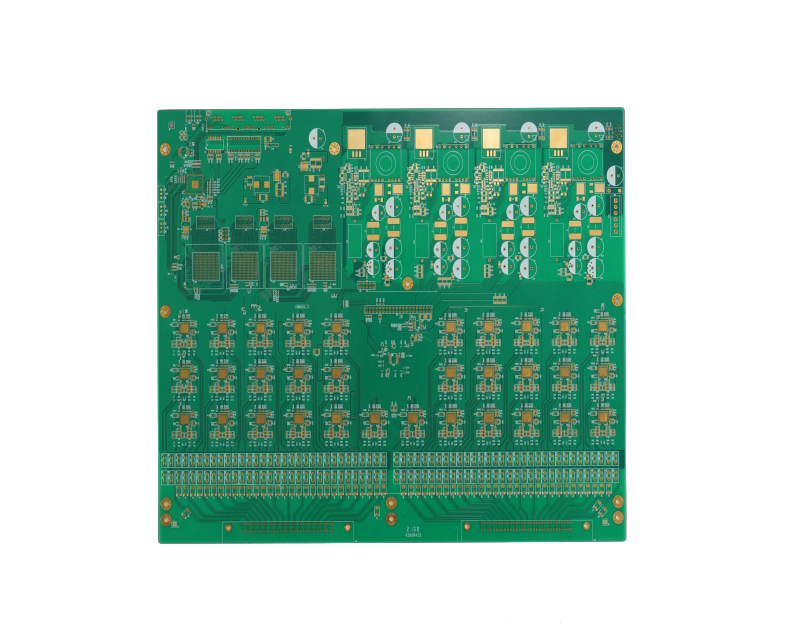
1. Technological Innovation
In the future, the development of the printed circuit board industry will be driven by technological innovation. With the popularization of 5G and AI technologies, and the high integration of consumer electronic products, the miniaturization of PCBs is an inevitable trend. This requires PCBs to have higher precision and miniaturization capabilities to meet the needs of accommodating more components in a limited space. At the same time, the rise of flexible electronic products such as wearable devices and flexible displays makes the flexibility of PCBs an important technological trend, requiring PCBs to have good flexibility and bendability to adapt to different shapes and space requirements.
2. Market Changes
With the continuous development of the global economy and the rise of emerging markets, the market structure of the printed circuit board industry will also change. On the one hand, demand from emerging markets will drive the growth of the printed circuit board industry. For example, with the widespread application of cloud computing and big data technologies, the demand for servers and high-performance computers is also increasing. On the other hand, competition in traditional markets will become more intense, and companies need to continuously improve their competitiveness to maintain their market position.
3. New Application Fields
In the future, the printed circuit board industry will continue to expand into new application fields. With the rapid development of the Internet of Things and intelligent vehicles, PCBs need to have stronger data processing capabilities and intelligent control capabilities to achieve interconnection and automation management between devices. For example, in the Internet of Things field, due to the large number of devices, a large amount of data transmission is required, and the demand for printed circuit boards will greatly increase.
In addition, printed circuit boards will also play an important role in artificial intelligence and autonomous driving. AI technology can help PCB manufacturers achieve production automation, improve production efficiency, reduce costs, and improve product quality and consistency. At the same time, AI technology can also be used to optimize PCB design and layout, improving product performance and reliability.
RECOMMENDED NEWS
High-end Custom Services: SMT Chip Processing Meets Diverse Industry Needs



(Telephone contact)
Email:
Address: Room 502, Building 1, No. 13, Bohua 4th Road, Huangpu District, Guangzhou City
COPYRIGHT © 2025 Guangzhou Tongsen Electronic Technology Co., Ltd. All rights reserved.