Welcome to Guangzhou Tongsen Electronic Technology Co., LTD. Website!


Basic knowledge of IC chips: main types and standards
Digital chips are used to generate, amplify, and process various digital signals. Digital chips generally perform logical operations; CPUs, memory chips, and DSP chips all belong to the category of digital chips. The difficulty in designing digital chips lies in their large scale and complex process requirements, so they usually require multiple teams to develop them jointly. The CPU, or central processing unit, serves as the computing and control core of a computer system and is the final execution unit for information processing and program running.
Chips, also known as microcircuits, microchips, and integrated circuits, are a general term for semiconductor components. There are many classifications of chips; according to the different signals processed, they can be divided into analog chips and digital chips. Simply put, analog chips utilize the amplification function of transistors, while digital chips utilize the switching function of crystals. Specifically, analog chips are used to generate, amplify, and process various analog signals. There are many types, including analog-to-digital converter chips (ADC), amplifier chips, power management chips, and PLLs. The difficulty in designing analog chips lies in the numerous non-ideal effects, requiring solid foundational knowledge and extensive experience, such as small-signal analysis, time-domain and frequency-domain analysis, etc.

Digital chips, on the other hand, are used to generate, amplify, and process various digital signals. Digital chips generally perform logical operations; CPUs, memory chips, and DSP chips all belong to digital chips. The difficulty in designing digital chips lies in their large scale and complex process requirements, so they usually require multiple teams to develop them jointly. The CPU, or central processing unit, serves as the computing and control core of the computer system and is the final execution unit for information processing and program operation.
The CPU is the core hardware unit that controls and allocates all computer hardware resources (such as memory, input/output units, etc.) and executes general operations.
According to the international standard classification model, they can be divided into: integrated circuits, discrete devices, sensors, and optoelectronic devices;
According to the circuit type, they can be divided into: analog integrated circuits, digital integrated circuits, and mixed-signal integrated circuits;
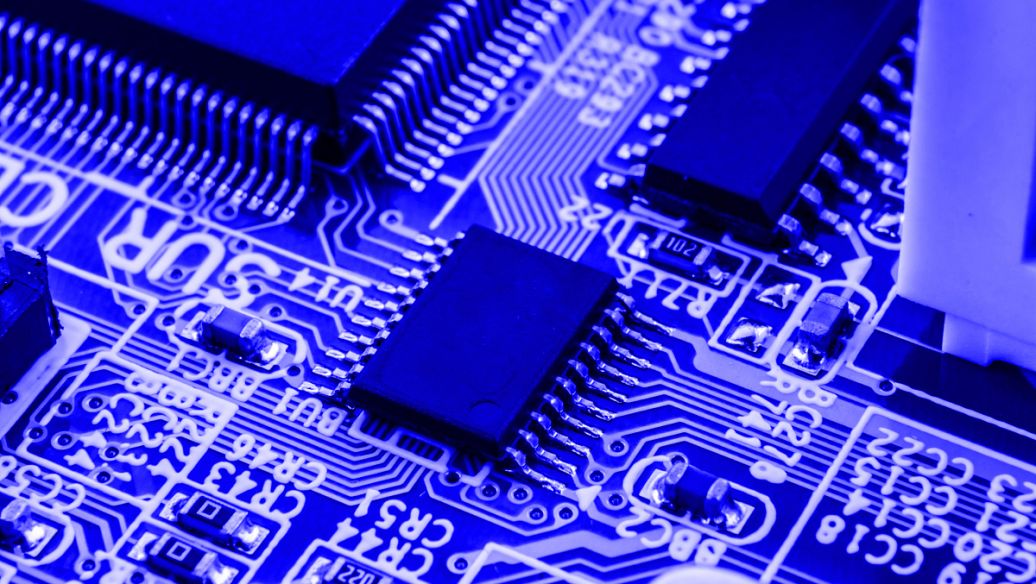
According to the different signals processed, they can be divided into: Analog chips: Chips that process analog signals are called analog chips; Digital chips: Chips that process digital signals are called digital chips. So what are analog signals and digital signals respectively? Analog signal: Simply put, it is a continuous signal, i.e., a continuous signal; Digital signal: It is a discrete signal, simply put, it is discontinuous.
According to their usage function, they can be classified into: GPU, CPU, FPGA, DSP, ASIC, SOC;
According to different application scenarios: consumer-grade (consumer electronics), industrial, automotive, military, and aerospace;

Because a single chip has millions or even billions of components, it is impossible to individually position and connect each component. The chip is too small to be soldered and mounted. Instead, designers use specialized programming languages to create small circuit components and combine them, gradually increasing the size and density of components on the chip to meet application needs.
RECOMMENDED NEWS
High-end Custom Services: SMT Chip Processing Meets Diverse Industry Needs



(Telephone contact)
Email:
Address: Room 502, Building 1, No. 13, Bohua 4th Road, Huangpu District, Guangzhou City
COPYRIGHT © 2025 Guangzhou Tongsen Electronic Technology Co., Ltd. All rights reserved.